
Tech
Voice Assistant Lawsuit Payout: What You Need to Know


Imagine asking your voice assistant for the weather, and later finding out your living room conversation might’ve been recorded, stored, and possibly reviewed without your consent. That’s the core controversy behind a recently settled class action lawsuit involving popular voice-enabled devices in the U.S.
In what’s become one of the most discussed privacy cases of the past year, consumers who owned voice-activated products between September 17, 2024, and December 31, 2024, could now be eligible for compensation. The devices in question include smartphones, laptops, smart speakers, smartwatches, and streaming boxes, essentially, any product embedded with a virtual voice assistant.
At the center of the case is the issue of privacy: users reported unintended activations during private conversations, with claims that these interactions were recorded and possibly used without permission. While the defendant in this case has denied any wrongdoing, a settlement of $95 million has already been agreed upon, marking a significant moment for the intersection of privacy, tech design, and consumer trust.

So, if you’ve been using a device with a virtual assistant recently, here’s what you need to know, and what you can do about it.
What Sparked the Settlement?
The lawsuit alleged that voice assistant devices were capable of activating without a prompt, potentially capturing confidential conversations. These unintentional activations weren’t just technical bugs, they were seen by the plaintiffs as violations of federal and state privacy laws.
Many consumers claimed they weren’t made aware that their devices could activate passively or store interactions indefinitely. This lack of transparency raised ethical concerns over the real trade-offs of “always-on” convenience. While the company behind the devices has strongly denied any unlawful behavior, it agreed to a financial settlement to resolve the case and avoid prolonged litigation.
While some believe this settlement is more symbolic than transformative, it sets a tone for the future: even tech giants can’t afford to ignore the fine print of privacy.
Are You Eligible for a Claim?
If you owned or purchased a device with a voice assistant in the United States or its territories between September 17, 2024, and December 31, 2024, and had the assistant enabled on that device, you could be eligible.
Qualifying devices include:
-
Smartphones and tablets with voice assistants
-
Laptops and desktop computers
-
Smartwatches
-
Smart speakers and home hubs
-
Streaming devices and smart TVs
However, there’s an important additional requirement: you must have experienced an unintentional activation of the voice assistant during a private conversation.
Employees of the company involved in the lawsuit, its legal team, and judicial members tied to the case are excluded from eligibility.
How to File Your Claim ?
Filing a claim is straightforward. Eligible users can submit a form online via the official settlement website. You’ll be asked to provide information about your qualifying devices (up to five) and may need to confirm that unintentional activations occurred.
Some users may have already received a physical mailer or email about the settlement. These communications typically include a Claim ID and Confirmation Code. If you’ve received this, you can use those codes to speed up your claim process. But don’t worry, if you haven’t received any notice, you can still file based on your device ownership and experience.
The deadline to file your claim is July 2, 2025.
That’s also the last date to opt out of the class action if you prefer to retain the right to take individual legal action later.
When Will Payments Be Issued?
The final approval hearing is scheduled for August 1, 2025. That hearing will determine whether the settlement is fair and whether it moves forward. However, even after approval, payments might take time to process, especially if there are appeals.
Only after all objections or appeals are resolved will distribution of payments begin. The settlement website is expected to keep consumers updated with a payment timeline and relevant details as they become available.
The expected payout per claim has not been confirmed publicly yet, as it will depend on the number of total claims filed.
What This Means for the Future of Tech ?
This case serves as a wake-up call, not just to consumers, but to the entire tech ecosystem. It shows that even in a world dominated by voice assistants, connected devices, and smart home gadgets, user trust still reigns supreme.
As digital experiences become more intimate, listening to us, learning from us, anticipating our every move, the line between helpful and intrusive continues to blur. Lawsuits like this push companies to walk that line more carefully and force users to ask tougher questions about who’s listening and why.
In an era where tech is no longer optional, understanding your rights isn’t just smart, it’s essential.
Level Up Insight
This case is less about one lawsuit, and more about setting precedent in a world where voice tech is creeping into our cars, homes, offices, and even wearables. For entrepreneurs, this is your sign: build trust-first tech. For users, read the fine print. Because in the future of connected everything, silence is never really silent.




Tech
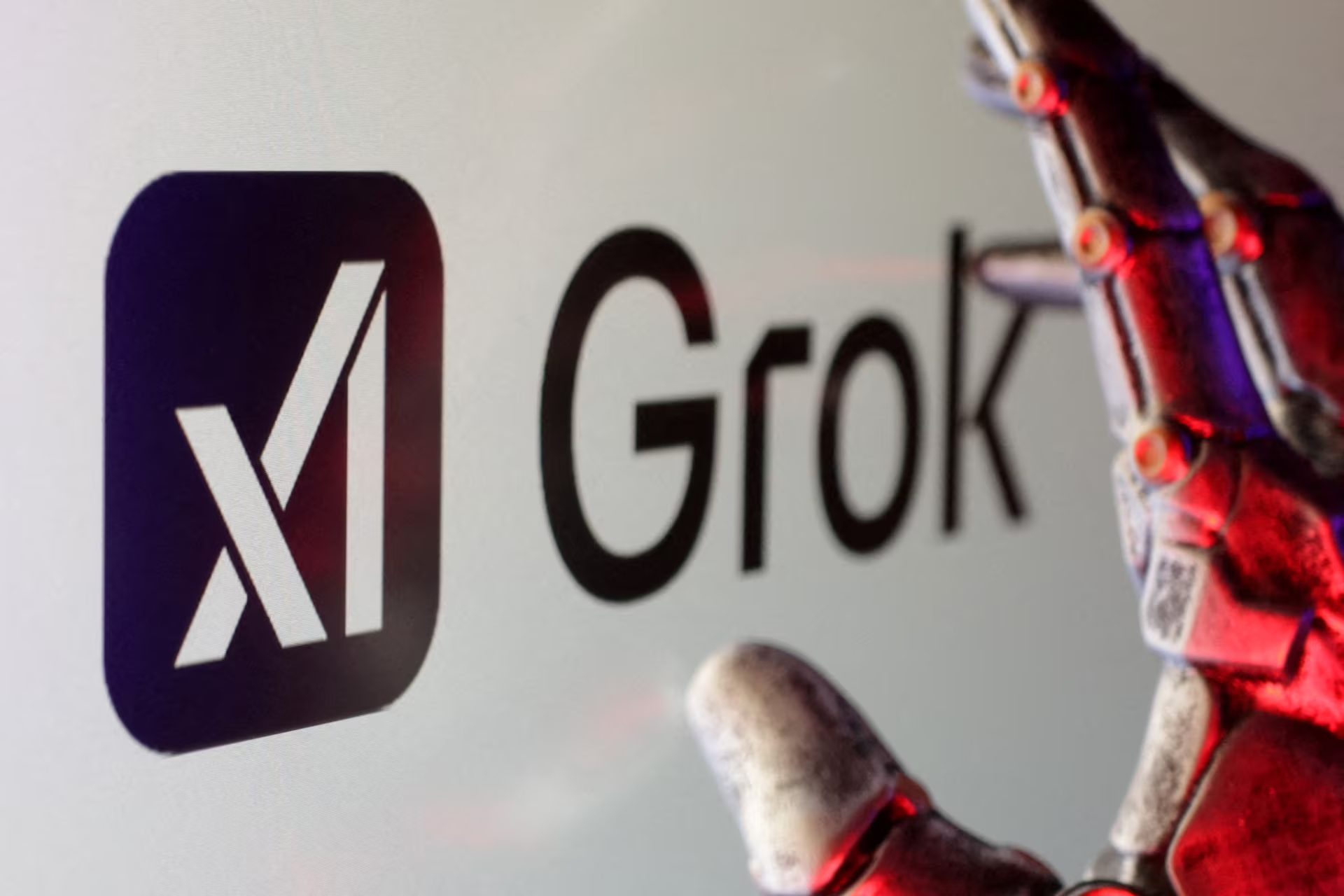
UK Government Criticizes X for Limiting Grok AI Image Editing to Paid Subscribers, Labeling It ‘Insulting’ to Victims of Abuse



Introduction
Technology is evolving faster than ever, and 2025 is shaping up to be a breakthrough year across multiple industries. Understanding the different types of technology is no longer optional—it’s essential for businesses, creators, students, and professionals who want to stay ahead.
Whether it’s artificial intelligence powering your daily apps or robotics revolutionizing healthcare, the types of technology emerging today are driving massive shifts in how we work, live, and connect.
This blog by Level Up Mag breaks down the most impactful types of technology in 2025, how they’re shaping the world, and why staying informed gives you a competitive advantage.
What Are the Top Types of Technology in 2025?
Here are the leading types of technology dominating the global landscape in 2025:
1. Artificial Intelligence & Machine Learning
AI is no longer futuristic—it’s everywhere. Among all types of technology, AI stands out as the most transformative.
AI impacts:
- Automation
- Personalized experiences
- Business decision-making
- Predictive analytics
- Creativity & content generation
Tools like ChatGPT, Midjourney, and various enterprise AI models prove that AI will continue reshaping industries. The rise of Generative AI, which is now used in marketing, design, research, and customer service, is defining the next wave of innovation.
2. Blockchain & Web3 Technology
Blockchain isn’t just for crypto anymore. It is becoming the backbone of trust-based digital systems.
This type of technology is used in:
- Supply chain tracking
- Smart contracts
- Identity verification
- Decentralized apps (dApps)
- Secure payments
Web3 introduces ownership, privacy, and transparency—making it one of the most important types of technology reshaping digital ecosystems.
3. Robotics & Automation
Robotics is evolving beyond manufacturing. In 2025, robots are in:
- Healthcare
- Agriculture
- Warehousing
- Retail
- Defense
From humanoid robots to delivery drones, this type of technology is leading the automation revolution.
Robots now assist in surgeries, pick warehouse orders, and even help with customer service. The combination of robotics + AI is unlocking new levels of productivity.
4. Biotechnology & HealthTech
Biotechnology is one of the fastest-growing types of technology, especially post-pandemic. It includes:
- Genetic engineering
- Vaccine development
- Wearable health devices
- AI-powered medical diagnostics
Breakthroughs in personalized medicine, DNA editing, and regenerative treatments are giving humanity tools to prevent diseases early and increase life expectancy.
HealthTech apps and devices are also enabling people to monitor their health in real time.
5. Cybersecurity & Digital Safety
As technology grows, so does cybercrime. That’s why cybersecurity has become one of the essential types of technology in 2025.
It includes:
- Threat detection systems
- Data protection tools
- Network security
- Zero-trust architecture
- AI-powered security systems
Businesses of every size rely on advanced cybersecurity to protect digital assets, customers, and operations.
6. Internet of Things (IoT) & Smart Technology
IoT connects physical devices to the internet, allowing them to communicate and function intelligently.
Popular IoT examples:
- Smart homes
- Connected cars
- Wearable devices
- Smart manufacturing
- Smart city infrastructure
This type of technology improves convenience, safety, and operational efficiency across industries.
7. Extended Reality (AR, VR & MR)
Extended Reality is becoming mainstream, especially in education, gaming, real estate, and corporate training.
This type of technology offers:
- Immersive learning
- 3D virtual experiences
- Virtual events
- Real-time simulation training
In 2025, AR glasses, VR training modules, and mixed reality environments are widely used for both entertainment and productivity.
8. Cloud Computing & Edge Computing
Cloud computing powers almost every major platform today. But edge computing is emerging as an important complement.
They support:
- Streaming services
- SaaS platforms
- Real-time data processing
- Remote work
These types of technology are crucial for storing data securely, improving speed, and enabling large-scale digital operations.

Why Understanding These Types of Technology Matters
Knowing the top types of technology helps you:
- Stay competitive in your industry
- Make informed business decisions
- Upskill for future careers
- Innovate faster
- Adapt to digital transformation
Technology is not slowing down—those who understand it will always stay ahead.
The Future of Technology in 2025 and Beyond
2025 marks a turning point in human innovation. The main types of technology discussed above are converging, amplifying each other’s potential.
AI + robotics will redefine labor.
Blockchain + IoT will enhance global transparency.
AR + 5G will reshape digital experiences.
Biotech + data analytics will transform healthcare.
The world is entering an era where technology doesn’t just support life—it enhances it.
Conclusion
From AI to biotechnology, the top types of technology in 2025 are opening the door to smarter, safer, and more efficient ways of living. Understanding these technologies empowers individuals and businesses to grow, innovate, and stay future-ready.
Level Up Mag will continue delivering powerful insights into the evolving tech landscape—because in this fast-changing world, staying informed is your biggest advantage.



-

 Health5 years ago
Eva Savagiou Finally Breaks Her Silence About Online Bullying On TikTok
-

 Health4 years ago
Traumatone Returns With A New EP – Hereafter
-

 Health4 years ago
Top 5 Influencers Accounts To Watch In 2022
-

 Fashion5 years ago
The Tattoo Heretic: Kirby van Beek’s Idea Of Shadow And Bone
-

 Fashion5 years ago
Natalie Schramboeck – Influencing People Through A Cultural Touch
-

 Fashion9 years ago
9 Celebrities who have spoken out about being photoshopped
-

 Health5 years ago
Brooke Casey Inspiring People Through Her Message With Music
-

 Health5 years ago
Top 12 Rising Artists To Watch In 2021
-

 Health5 years ago
Madison Morton Is Swooning The World Through Her Soul-stirring Music
-

 Health & Wellness5 years ago
Ali Farahaani, The Optimistic Performer Who Is Ready To Soar In The World