Connect with us

General

Jon Stewart Mocks Trump Inauguration & Elon Musk’s Gesture

Published

on

jon-stewart-mocks-trump-inauguration-elon-musks-gesture

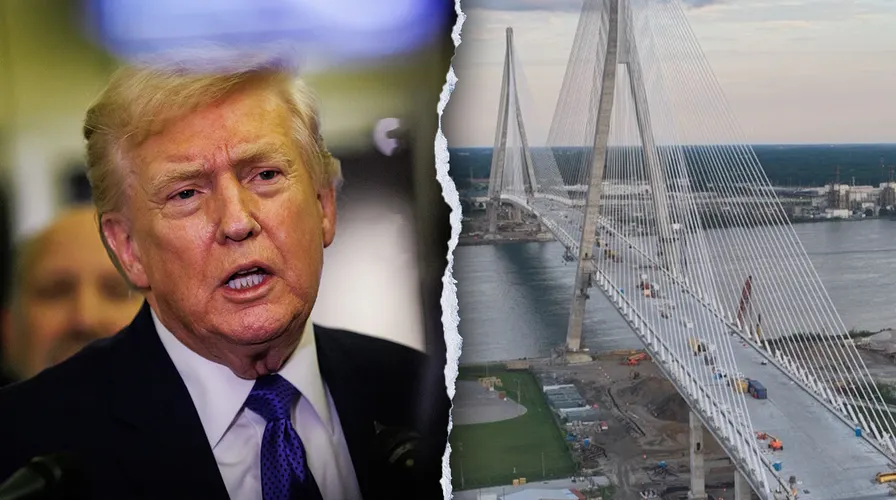
Jon Stewart took to The Daily Show to give his take on the “historic vibe shift” during Donald Trump‘s second inauguration. Stewart didn’t hold back, critiquing everything from the tech billionaires attending the event to the dramatic moments throughout the day, including Trump’s speech and Elon Musk’s controversial hand gesture.

Stewart began his 15-minute opener by making fun of the tech moguls, calling them “bald billionaires” who “control maybe 20 percent of the world’s wealth and 100 percent of your nudes.” He humorously questioned whether these billionaires, who had pledged millions to be in attendance, should be gathering in a secret lair in Zurich instead of an American inauguration. The sharp satire aimed at the powerful elite continued as Stewart commented on the surreal nature of the event.

Regarding Elon Musk, Stewart took a dig at Musk’s hand gesture, which many observers found reminiscent of a Nazi salute. “I’m just going to be generous and say maybe that was Elon’s attempt at dabbing on the haters,” Stewart joked, playing the awkward gesture multiple times to underscore the humor in the situation.

Stewart’s commentary didn’t stop there. On Trump’s swearing-in, he quipped about Trump not placing his hand on the Bible, remarking that both the Bible and Trump might have spontaneously combusted in the process. As Trump gave his speech, Stewart also had a field day with the awkward passive-aggressive tone between Trump and outgoing President Joe Biden. Noting Biden’s quiet presence just behind Trump, Stewart poked fun at the tradition of incoming presidents taking jabs at their predecessors during the inaugural address.

The satire continued with a critique of Biden’s last-minute pardons, particularly those for his family, as Trump took the stage. Stewart humorously compared Biden’s actions to a captain saving his own family while letting the rest of the ship’s passengers fend for themselves.

Concluding his remarks, Stewart highlighted the absurdity of the day: “A man who tried to overthrow the government has been peacefully handed the reins of power, and the outgoing president has started a new tradition of blanket pardoning everyone in his orbit.” Stewart summed up the event as a spectacle of political power and absurdity, describing it as a “magnificent snake sucking its own dick, a cycle of no accountability.”

jon-stewart-mocks-trump-inauguration-elon-musks-gesture

jon-stewart-mocks-trump-inauguration-elon-musks-gesture

Stewart’s sharp wit and biting commentary on the events of January 20th, 2025, provide a unique and humorous take on the political scene, capturing the tension, drama, and contradictions of an event that will surely be remembered for its striking moments.


 

Sahil Sachdeva is the CEO of Level Up Holdings, a Personal Branding agency. He creates elite personal brands through social media growth and top tier press features.

Continue Reading
Click to comment

Leave a Reply

Your email address will not be published. Required fields are marked *

General

Tragic Landfill Collapse in Cebu City Claims One Life, Leaves Dozens Missing

Published

on

ap_69609fdf629a7-1767940063

A catastrophic collapse at a landfill in Cebu City, central Philippines, has resulted in at least one death and over 30 people unaccounted for, sparking an intensive rescue effort and highlighting serious flaws in the nation’s waste management systems.

The disaster struck on Thursday afternoon at the Binaliw Landfill, when a massive pile of garbage suddenly slid, engulfing sanitation workers in tons of debris. A 22-year-old woman was confirmed dead, while at least 12 injured individuals were rescued and taken to hospitals. Most of those missing are thought to be workers present at the site during the incident.

Rescue operations are ongoing but hampered by the precarious instability of the waste mound. Cebu City Mayor Nestor Archival emphasized the unique dangers, stating that the site differs from typical landslides, as digging from the top risks destabilizing lower layers and endangering anyone trapped.

Approximately 300 responders, from government bodies, emergency services, and volunteer groups, are involved, using excavators, fire trucks, ambulances, and specialized teams to cautiously probe the debris for survivors. Families of the missing gather nearby, enduring anxious waits amid reports of faint calls for help heard shortly after the collapse.

Investigations into the cause are underway, but officials have raised alarms about longstanding mismanagement. Councillor Joel Garganera noted that the facility falls short of sanitary landfill standards, functioning more like an open dump. Practices such as excavating soil from the waste hill and stacking new garbage atop it likely undermined its stability.

Spanning about 15 hectares, the Binaliw site handles waste for Cebu City, a key hub in the Visayas and surrounding areas. Like many urban centers in the Philippines, it struggles with surging waste volumes due to urbanization and inadequate alternatives.

The incident has intensified demands for better enforcement of environmental regulations, improved waste segregation, and safer disposal methods. For now, efforts center on locating the missing and averting additional tragedies in what has become one of Cebu City’s most devastating recent accidents

Continue Reading

General

Bottled Water Pricier Than Milk or Petrol in Venezuela: Portrait of an Ongoing Crisis

Published

on

venezuela-water-crisis-02-jef-190314_hpMain_16x9_992

Venezuela, endowed with the planet’s largest proven oil reserves, remains a stark example of economic paradox and hardship for the international community. A telling sign of this turmoil is the relative cost of everyday essentials, where a litre of bottled drinking water often exceeds the price of both milk and gasoline. This inverted pricing underscores the profound effects of prolonged political instability, policy failures, and external sanctions on the lives of ordinary citizens.

Currently, petrol remains heavily subsidized, making a litre extraordinarily cheap, sometimes equivalent to just a fraction of a US cent, or effectively negligible in cost. Milk typically ranges around the equivalent of a couple of dollars per litre in dollarized markets, while bottled water can surpass that due to shortages in safe tap water. Cooking oil fetches even higher prices. In a nation once renowned for its inexpensive fuel and abundant natural resources, these disparities reveal profound infrastructural decay: fuel remains affordable due to government support, but access to clean water suffers from crumbling pipes, power outages, and supply disruptions.

The roots of Venezuela’s downturn stretch back years. Hyperinflation peaked in the late 2010s and early 2020s, devaluing the bolivar to near uselessness and forcing people to haul wheelbarrows of cash for basic purchases. The government responded by lopping multiple zeros off the currency, but inflation persisted, devastating savings and plunging most of the population into poverty.

The human toll has been devastating. In the early 2020s, poverty rates soared, affecting over 90% of households in some estimates. Food scarcity led to widespread malnutrition, with reports of people rummaging through trash for meals. This sparked a massive exodus—one of the largest in modern historym with millions fleeing to neighboring nations like Colombia and Brazil.

As the local currency imploded, informal dollarization took hold, stabilizing prices in many areas, especially cities. By the mid-2020s, transactions increasingly occurred in US dollars, a trend accelerated when authorities eased currency controls.

At the heart of this extended crisis was Nicolás Maduro’s leadership, beginning in 2013 following Hugo Chávez’s passing. His administration oversaw sharp economic shrinkage, plummeting oil output, and heightened global isolation amid accusations of graft, rigged elections, and rights violations.

The state-owned oil giant PDVSA, formerly an economic powerhouse, faltered due to mismanagement, underinvestment, and sanctions. Production nosedived, stripping the government of crucial income. Paradoxically, Venezuela occasionally imported fuel despite its vast reserves.

In essence, the anomaly of water outpricing petrol is not merely a curiosity but a poignant emblem of breakdown: eroded public services, warped incentives, and relentless daily hardship. Venezuela’s commodity prices narrate a tale of profound institutional collapse, with lasting repercussions for its people and the region.

Continue Reading

General

The Missing Link Between Success and Relationships

Published

on

Copy of Copy of Copy of Copy of Copy of Copy of Copy of Copy of Copy of Copy of Copy of Copy of Copy of Copy of Copy of Copy of Copy of Copy of Copy of Copy of Copy of Copy of Copy of Copy of Copy (1)

The quality of our relationships is one of the most important aspects that often goes unnoticed in a world obsessed with metrics, productivity tools, and relentless ambition. Gurugram-based leadership coach, bestselling author, and winner of the WAHStory 40 Under 40 Award, Dhirendra Singh, believes that the gap between personal and professional growth stems from a lack of relationship development, both at work and at home. With over 22 years of experience as a leader and having trained more than 275,000 people in over 63 countries, Singh’s insights, outlined in his bestselling book “Rise in Every Relationship,” have already hit a milestone of 5,000+ Reader’s, demonstrating that performance, leadership, and well-being can be improved through better communication, emotional maturity, and clarity. As his book gains international attention and translations, including a soon-to-be-released Arabic version, the message Singh conveys is reaching a global audience: the key to true success lies in how we treat ourselves and others.

A Journey from Corporate Leadership to Purpose-Driven Entrepreneurship

The fast-paced world of corporate leadership was where Dhirendra Singh’s career began, as he served in various roles, including learning and development (L&D), sales, operations, and consulting. In the 20 years, he noticed that there was a repetitive problem of disconnection: as organizations were eager to spend a lot of money on performance strategies, they tended to forget about the human realities of relationships and communication. This void led to an ambitious shift to entrepreneurship, which is associated with such challenges as quitting the corporate job, dealing with unpredictability, and addressing doubts.

It did not stop Singh, who established a coaching practice on the notion that relationships are the key to success in life and business. This led him to the establishment of his coaching brand and the publication of a book titled “Rise in Every Relationship”, which encapsulates his philosophy of emotional clarity, accountability, and conscious communication. His work has now been available to a world audience, with clients and readers enjoying his pragmatic models and life experience. This move by Singh represents his fundamental belief: Sustainable success is not speed, but self-consciousness.

A Philosophy Rooted in Relationships as the Catalyst for Growth

The personal brand of Singh is based on the border of relationships, leadership, and performance, which provides a hybrid business model that combines high-touch engagement and scalable offerings. Its services involve one-on-one coaching, emotional intelligence and conscious communication building, corporate workshops, relationship-based leadership, keynotes, which inspire actionable change, and intellectual property, such as Rise in Every Relationship. Moreover, digital learning programs can be scaled, and thus his insights can reach a wide range of people.

The difference between Singh and his colleagues is that he tries to solve the issues instead of providing a superficial solution to the problem. The majority of issues in life and business are not strategy problems, he says, and are relationship problems. His style is supported by a solid background of corporate and coaching experience that integrates both the art of relationships and the application of leadership skills. This distinction has given him a reputation in the personal development industry of India, in which he has idols such as Dr. Gaur Gopal Das, Sandeep Maheshwari, and Ankur Warikoo who have made a distinct mark. However, the focus on the relationship-based growth by Singh is clear and specific, which creates a subtle approach appealing to both people and companies.

Inspiring Transformation Through Awareness and Better Conversations

Singh aims to change others by showing them that they do not need to reinvent themselves radically, but put in honest self-reflection and better communication. Instead, he says, you need to change how you relate, not change who you are. He equips people with the ability to follow awareness rather than reaction, clarity rather than conflict, and consistency rather than quick fixes through coaching insights in the real world and transformations of clients. His book Rise in Every Relationship is one of the foundations, providing practical means to enter personal and professional relationships and be more emotionally responsible.

To the future, Singh sees an ecosystem that is globally relevant based on relationship-based growth, in which leadership, performance, and well-being are elevated through mindful communication and emotional intelligence. He wishes to size this influence by increasing the number of books, formal learning initiatives, and organizational treatments that remake the way teams work and cultures prosper. According to him, healing and leadership go hand in hand when we learn to relate to having awareness and responsibility.

Dhirendra Singh can be a game-changer for people who want to improve their communication potential to become more effective leaders, learn to embrace emotional intelligence coaching, or discover their potential to change, both personally and professionally. Focusing on relationships first, he demonstrates that it is not only possible to have clarity, stronger teams, and meaningful success, but it is inevitable when we bring ourselves into any relationship.

Continue Reading

General

U.S. Christmas Day Airstrikes in Nigeria Spark Debate Over Targets and Intentions

Published

on

NIGERIA-INSURGENCY-AFTERMATH-6_1766753826089_1766753838122

On December 25, 2025, the United States conducted airstrikes against alleged Islamic State (ISIS)-linked militant camps in northwestern Nigeria’s Sokoto State. President Donald Trump described the operation as a “powerful and deadly” response to militants he accused of primarily targeting and killing Christians, and he later referred to it as a deliberate “Christmas present” to the terrorists by delaying the strikes for symbolic effect.

U.S. Africa Command (AFRICOM) confirmed the strikes were carried out in coordination with Nigerian authorities, using precision munitions to target two camps in remote areas, reportedly killing multiple militants with no initial reports of civilian casualties. The Nigerian government emphasized that the operation relied on shared intelligence and aimed to disrupt foreign ISIS elements infiltrating from the Sahel region, while downplaying any religious framing of the conflict.

Trump has long portrayed violence in Nigeria as a targeted genocide against Christians, a claim repeatedly contested by Nigerian officials and analysts who describe the country’s insecurity as multifaceted—driven by banditry, ethnic tensions, resource conflicts, and jihadist activity that affects Muslims and Christians alike. Local residents in affected areas, such as the village of Jabo where debris fell, reported no prior history of anti-Christian militant presence and expressed confusion over the strikes.

The timing drew sharp criticism, coinciding with a separate suicide bombing at a mosque in Borno State that killed worshippers, underscoring the indiscriminate nature of extremist violence. Defense experts questioned the long-term efficacy of isolated airstrikes, arguing they may offer tactical gains but risk escalating instability without addressing root causes like governance failures.

This action fits into increased U.S. military engagement in Africa under Trump, including recent strikes in Somalia. While supporters praised it as decisive protection for persecuted communities, critics highlighted concerns over sovereignty, potential civilian risks, diplomatic strains, and the politicization of counterterrorism efforts.

Ongoing questions surround the strikes’ transparency, effectiveness in degrading militant networks, and alignment with broader U.S. goals in the region, as civilians continue to bear the brunt of Nigeria’s persistent security challenges.

Continue Reading

General

US Imposes Visa Bans on Former EU Commissioner Thierry Breton and Anti-Disinformation Activists Amid Free Speech Row

Published

on

2025-12-23T230827Z_1_LYNXMPELBM0YK_RTROPTP_4_USA-EUROPE-CENSORSHIP

In a significant escalation of transatlantic tensions over digital regulation, the US State Department announced on December 23, 2025, visa restrictions on five Europeans, including former EU Commissioner Thierry Breton. The move targets individuals accused of pressuring American tech platforms to censor or suppress viewpoints, particularly under the European Union’s Digital Services Act (DSA).

Secretary of State Marco Rubio described the sanctioned individuals as leading “organized efforts to coerce American platforms to censor, demonetize, and suppress American viewpoints they oppose.” He labeled them “radical activists and weaponized NGOs” advancing “censorship crackdowns by foreign states” against US companies and speakers. The restrictions, invoked under Section 212(a)(3)(C) of the Immigration and Nationality Act, bar entry to the US and could lead to removal proceedings for those already present. Rubio warned the list could expand if similar actions continue.

The most prominent target is Thierry Breton, the French former commissioner for the internal market (2019-2024) and chief architect of the DSA. US officials, including Under Secretary for Public Diplomacy Sarah Rogers, called him the “mastermind” behind the law, accusing him of using it to threaten platforms like Elon Musk’s X (formerly Twitter). Breton frequently clashed with Musk over compliance with EU rules on content moderation, illegal content removal, transparency, and disinformation risks.

The other four are leaders of organizations combating online hate and misinformation:

  • Imran Ahmed, CEO of the UK/US-based Center for Countering Digital Hate (CCDH), criticized for reports like the “Disinformation Dozen” targeting anti-vaccine figures.
  • Josephine Ballon and Anna-Lena von Hodenberg from Germany’s HateAid, described as “trusted flaggers” under the DSA.
  • Clare Melford, head of the UK-based Global Disinformation Index (GDI), accused of using US funds to promote blacklisting of American media.

The DSA, effective since 2024, requires large platforms to explain moderation decisions, curb illegal content, enhance advertising transparency, and grant researchers data access to study harms like disinformation or risks to minors. The EU insists it promotes accountability without targeting political speech and applies only within its borders.

US conservatives, however, view it as extraterritorial overreach stifling right-wing voices. The action follows recent EU fines on X for DSA violations and US warnings of retaliation against European firms like Siemens, Spotify, and DHL. It aligns with broader Trump administration criticism of European regs, including the UK’s Online Safety Act.

Reactions were swift and sharp. Breton called it a “witch hunt” reminiscent of McCarthyism, posting on X: “Censorship isn’t where you think it is.” He noted the DSA’s unanimous approval by EU member states and 90% of the European Parliament.

French Foreign Minister Jean-Noël Barrot condemned the bans as unacceptable interference, stressing the DSA’s democratic legitimacy and lack of extraterritorial effect. HateAid leaders vowed not to be intimidated, framing the move as obstructing human rights work.

Analysts see this as highlighting a deepening philosophical divide: Europe’s focus on platform accountability and harm reduction versus America’s emphasis on robust free speech protections, even for controversial content. With global tech firms navigating conflicting rules, such clashes risk broader trade and diplomatic fallout in the digital era.

Continue Reading

General

Epstein Files Release: Key Details and Notable Figures

Published

on

34eef780-c09d-11f0-ae46-bd64331f0fd4

The U.S. Department of Justice has begun releasing documents related to the investigations into Jeffrey Epstein, the late financier and convicted sex offender, in compliance with the Epstein Files Transparency Act, a law passed by Congress and signed by President Donald Trump in November 2025. This initial batch provides glimpses into Epstein’s associations, prior probes, and victim accounts, though much remains redacted or withheld pending review.

The disclosed materials encompass photographs, flight logs, emails, investigative notes, court records, and other items. Thousands of pages have been made public so far, but officials acknowledge that hundreds of thousands more are still being processed, with additional releases planned in the coming weeks. Some files were briefly posted and then removed to safeguard victim privacy, and extensive redactions have been applied.

Bipartisan criticism has emerged, with lawmakers from both parties accusing the DOJ of incomplete compliance due to delays beyond the legal deadline and unclear redactions.

High-profile individuals appear in photos and references, but authorities and experts emphasize that mere mentions or images do not imply criminal involvement. Many of those named have denied any knowledge of or participation in Epstein’s offenses.

Notable mentions include:

-Former President Bill Clinton: Multiple photographs depict him with Epstein in social settings from the 1990s and 2000s, such as at events or relaxing. Clinton has consistently denied awareness of Epstein’s illegal activities and faces no accusations from victims. His team has faulted the partial release for stoking unfounded speculation.

President Donald Trump: References are limited, primarily involving flight logs showing him as a passenger on Epstein’s jet in the 1990s (sometimes with family members or Ghislaine Maxwell). One document mentions an unproven allegation of Epstein introducing a minor to Trump at his Florida resort, without accusing Trump of wrongdoing. Trump has denied any misconduct, and the administration has endorsed further transparency.

– Andrew Mountbatten-Windsor (formerly Prince Andrew): Images show him in social contexts, including with Maxwell (Epstein absent in some). Documents highlight past scrutiny of his Epstein ties, including prosecutor views on potential misconduct with a victim (though no charges resulted). He has denied all inappropriate actions.

– Celebrities: Photos feature Michael Jackson, Mick Jagger, Diana Ross, Chris Tucker, and others at events or with Epstein. Contexts are often unclear, and Epstein was known to retain images from gatherings he attended or collected.

Victim testimonies are included, such as accounts from early reporter Maria Farmer, who described threats and theft of family photos in the 1990s. She has expressed relief at the disclosures.

Redactions primarily protect victims and potential ongoing matters, per officials, though calls for greater clarity persist. No comprehensive “client list” has emerged, consistent with prior DOJ statements finding no evidence of one.

Further disclosures are expected soon, as the case continues to prompt debates on accountability, powerful connections, and government openness.

Continue Reading

General

Senior Russian General Assassinated in Moscow Car Bombing, Continuing Wave of Targeted Attacks

Published

on

250425-moscow-car-bomb-mb-1151-6cad9f

A senior Russian military officer, Lieutenant General Fanil Sarvarov, was killed in a car bomb explosion in Moscow on Monday, according to Russia’s Investigative Committee. Authorities are investigating possible links to Ukrainian intelligence services as one of several potential motives.

Sarvarov, aged 56 and head of the Russian Armed Forces General Staff’s operational training directorate for nine years, succumbed to injuries after an explosive device detonated under his vehicle in a southern residential area of the capital. Russian President Vladimir Putin was promptly notified of the incident through security channels.

State media footage depicted a severely damaged car in a residential neighborhood, with investigators examining the site.

The attack fits into a broader series of assassinations targeting prominent Russian military leaders and pro-war figures since the 2022 full-scale invasion of Ukraine. Previous incidents include the killings of Lieutenant General Yaroslav Moskalik (April 2025, car bomb), Lieutenant General Igor Kirillov (December 2024, scooter bomb), and Armen Sarkisyan, alongside influencers like Darya Dugina (2022 car bomb) and Vladlen Tatarsky (2023 cafe bombing). Russian officials have frequently attributed such operations to Ukrainian security forces.

As the probe advances, focus remains on potential security vulnerabilities and the underlying reasons for the strike, underscoring the persistent shadow war and dangers confronting high-ranking Russian officials even in the heart of Moscow.

Continue Reading

General

Ukraine Peace Talks Stall in Moscow as NATO Ministers Convene in Brussels

Published

on

022f95a0-d01c-11f0-a0e2-816fae62ea61 (1)

The latest round of high-stakes diplomacy aimed at ending the Ukraine war concluded in Moscow on Wednesday with little sign of tangible progress. After nearly five hours of discussions between Russian President Vladimir Putin and US envoys Steve Witkoff and Jared Kushner, both sides described the talks as “constructive” yet admitted that no compromise had been reached.

The Kremlin’s foreign policy adviser, Yuri Ushakov, said the meeting was “very useful and substantive,” but emphasised that the parties had not settled on a “compromise version” of a peace plan. “A lot of work lies ahead,” he told reporters shortly after the delegation left the Kremlin.

The talks represent the most intensive engagement between Washington and Moscow since the leaked 28-point US peace plan triggered diplomatic shockwaves two weeks ago. That original proposal,  widely criticised as favourable to Russia  included recognition of Crimea and the separatist-held regions of Donetsk and Luhansk as Russian territories, restrictions on Ukraine’s military size, and the reintegration of Russia into the global economy.

A Divisive Proposal and a Flurry of Counterplans

Following the leak, Ukraine and several European allies pushed back forcefully, prompting what has become a fast-moving and, at times, fragmented diplomatic effort. A counter-proposal spearheaded by European governments removed the most contentious elements and affirmed Ukraine’s territorial integrity. Washington and Kyiv subsequently met in Geneva and Florida to merge competing drafts.

Ushakov confirmed that Russia received not only a revised 28-point plan but also four additional documents from the US delegation. However, both sides have agreed to keep the details confidential, a decision that has fuelled speculation across Europe about the concessions being considered behind closed doors.

Russia’s position remains firm: proposed amendments from Ukraine and Europe are “not acceptable,” Putin reiterated earlier in the day. In stark language, he warned that while Moscow had no intention of conflict with Europe, Russia was “ready right now” if Europe “wants to go to war.”

US Silence and European Anxiety

Notably, the US, Ukraine, and European governments have yet to officially comment on the outcome of the Moscow meeting. Kyiv, which has been excluded from the face-to-face discussions in Moscow, is awaiting updates from Washington before determining next steps.

Ukrainian President Volodymyr Zelensky, speaking in Dublin after meeting Irish officials — said he is ready to engage with the American delegation “if we can count on real, specific dialogue, not just words.” He added that he is waiting for “signals” from Washington before deciding whether to meet Witkoff or US President Donald Trump in the coming days.

Across Europe, nerves are increasing. Diplomats fear a scenario in which Washington and Moscow negotiate a framework that sidelines Ukraine and dilutes European security interests  a concern amplified by Russia’s increasingly assertive tone.

NATO Ministers Meet Amid Uncertainty

As news of the stalled talks filtered out of Moscow, NATO foreign ministers gathered in Brussels for a previously scheduled meeting. While the summit is expected to cover defence readiness and regional security, the Ukraine talks now dominate the agenda.

Officials in Brussels have privately expressed concern that the US-Russia channel may be moving faster than the wider coalition of Ukraine’s allies, risking fractures among Western partners at a pivotal moment in the war.

War Continues as Diplomacy Drags

Even as diplomats exchange documents and carve out negotiating language, the war on the ground shows no sign of slowing. Russian forces continue advancing in the Donetsk region, with Ukrainian civilians fleeing towns including Kramatorsk and Kostiantynivka. Some soldiers returning to the front remain sceptical of the diplomatic push, calling the peace talks “just chatter.”

Ukraine’s top general, Oleksandr Syrskyi, reported signs of “significant improvement” in the tactical position around Kupyansk, a rare optimistic note amid Russia’s claim to have seized Pokrovsk, a claim contested by Kyiv and international analysts.

The humanitarian pressure is growing too. Civilians describe worsening drone strikes, unstable access to basic supplies, and a mounting sense that time is running out to secure a ceasefire before winter conditions worsen.

A Fragile Opening  or Another Stalemate?

For now, the Moscow talks appear to have created neither breakthrough nor breakdown, only a precarious middle ground. Analysts suggest Russia may be playing for time to consolidate battlefield gains, while Washington appears eager to present progress without conceding too much publicly.

Whether this moment becomes the beginning of a genuine negotiating process or merely another diplomatic dead-end will depend on what comes next in Brussels, Washington, and Kyiv.

Continue Reading

General

Expired Aid from Pakistan Sparks Diplomatic Friction in Post-Cyclone Sri Lanka

Published

on

153233641

Shocking Discovery Amid Relief Efforts

In the wake of devastating Cyclone Ditwah, which left thousands displaced and caused widespread flooding across Sri Lanka, a consignment of humanitarian aid from Pakistan—intended as a gesture of South Asian solidarity, has instead become a source of controversy and quiet diplomatic tension. Sri Lankan officials conducting routine checks on incoming relief supplies were stunned to discover that a significant portion of the Pakistani shipment contained expired goods: packaged food items, powdered milk for children, and over-the-counter medicines whose effectiveness and safety could no longer be guaranteed.

The revelation, first reported by local media and quickly amplified across social media platforms, has triggered public outrage in Sri Lanka and drawn mocking commentary from neighboring India. Photos of expired product labels have gone viral, fueling memes and accusations that range from incompetence to insensitivity toward a fellow nation in crisis.

Economic Crisis in Pakistan Casts Long Shadow on Aid Quality

Pakistan, long regarded as a generous responder in regional disasters, is currently grappling with one of the worst economic meltdowns in its history, inflation exceeding 30 percent at times, a collapsing currency, and acute shortages of foreign exchange. Observers suggest that these pressures have inevitably seeped into every corner of governance, including the management of humanitarian aid stockpiles and dispatch procedures.

Sources within Pakistan’s disaster management authority have acknowledged that overstretched budgets and staff cuts may have led to lapses in warehouse rotation protocols and pre-shipment inspections. While Islamabad insists the inclusion of expired items was unintentional and has ordered an immediate internal investigation, the incident has intensified domestic scrutiny on how relief operations are handled during a period of national austerity.

Sri Lanka Walks a Diplomatic Tightrope While Demanding Higher Standards

Despite the public furor, the Sri Lankan government has deliberately refrained from lodging a formal protest or recalling Pakistan’s High Commissioner. Senior officials describe the matter as being addressed “quietly through bilateral channels,” reflecting Colombo’s reluctance to alienate a traditionally friendly neighbor at a time when it still relies heavily on regional support for both reconstruction and broader economic recovery.

Local humanitarian organizations, however, are less restrained in their criticism. Several NGOs and relief coalitions have called for the immediate introduction of mandatory, independent verification of all foreign aid shipments, regardless of the donor country, before any items reach affected communities. “Gratitude for solidarity should never come at the cost of people’s health and dignity,” one Colombo-based aid coordinator told reporters.

As South Asia braces for an era of more frequent and intense climate disasters, this episode underscores a painful reality: even the most well-intentioned cross-border assistance can quickly sour into diplomatic embarrassment without rigorous, transparent quality-control mechanisms. For Pakistan, restoring trust will require more than internal reviews—it will demand visible reforms. For Sri Lanka and the wider region, the incident is a wake-up call to treat incoming aid not just with gratitude, but with meticulous caution.

Continue Reading

General

Jimmy Cliff, Reggae Pioneer and Star of ‘The Harder They Come’, Dies at 81

Published

on

Jimmy-Cliff-Obit-Template-Headshot-Getty-H-2025

Jimmy Cliff, the Jamaican singer, songwriter and actor whose voice and vision helped turn reggae into an international force, has died at the age of 81. His wife, Latifa Chambers, announced on Instagram that he passed away after suffering a seizure followed by pneumonia. “Jimmy, my darling, may you rest in peace,” she wrote in a statement also signed by their children, Lilty and Aken.

From Rural Poverty to Kingston’s Sound Systems

Born James Chambers in 1944 in St James parish, Jamaica, Cliff was the eighth of nine children raised in extreme hardship. He started singing in church at age six and, inspired by ska star Derrick Morgan, taught himself to write songs. As a teenager he moved to Kingston, changed his surname to “Cliff” a declaration of the heights he planned to reach, and scored his first Jamaican number one with “Hurricane Hattie” while still only 14.

In 1965 he moved to London to work with Island Records, the future home of Bob Marley. Early attempts to soften his sound for British rock audiences flopped, but in 1969 everything changed with the breezy global hit “Wonderful World, Beautiful People” and the stark anti-war anthem “Vietnam”, which Bob Dylan hailed as the best protest song ever written.

The Harder They Come: The Film That Changed Everything

Cliff’s defining moment came in 1972 when he starred as Ivan Martin, a defiant country boy turned outlaw, in the landmark film The Harder They Come. He also contributed several classics to its soundtrack, including the title track, “You Can Get It If You Really Want” and the soul-baring “Many Rivers to Cross”. The movie and album introduced reggae to millions outside Jamaica and remain cultural touchstones more than fifty years later.

Through the decades Cliff kept evolving: collaborating with the Rolling Stones, topping the US charts again in 1993 with his radiant cover of “I Can See Clearly Now” for the film Cool Runnings, and earning Grammy Awards for Cliff Hanger (1985) and Rebirth (2012). In 2010 he was inducted into the Rock and Roll Hall of Fame, and in 2003 Jamaica honoured him with the Order of Merit.

Even in his later years he continued to tour, headlining Glastonbury’s legends slot and winning over new fans at Coachella. Yet Cliff always said the greatest reward came from listeners who told him his songs had changed their lives – from dropouts who returned to school because of “You Can Get It If You Really Want” to generations who found hope in his blend of struggle and uplift.

Jimmy Cliff leaves behind a catalogue that still feels urgent and joyful, and a legacy as one of the artists who carried Jamaica’s heartbeat to the world. Rest in power.

Continue Reading

Trending

Subscribe To Our News Letter


Contact Us
First
Last

This will close in 20 seconds