Fashion
Emmy Awards Fashion Trends Unveils the Glamorous Transformation of Celebrities
Published
2 years agoon
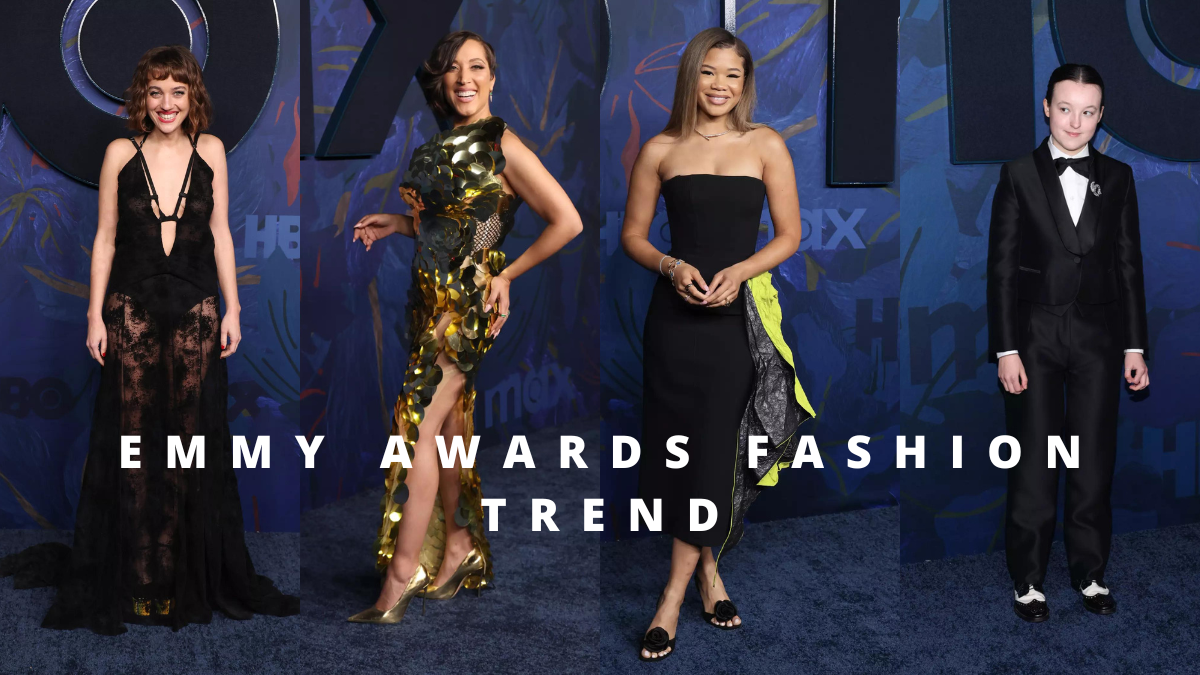
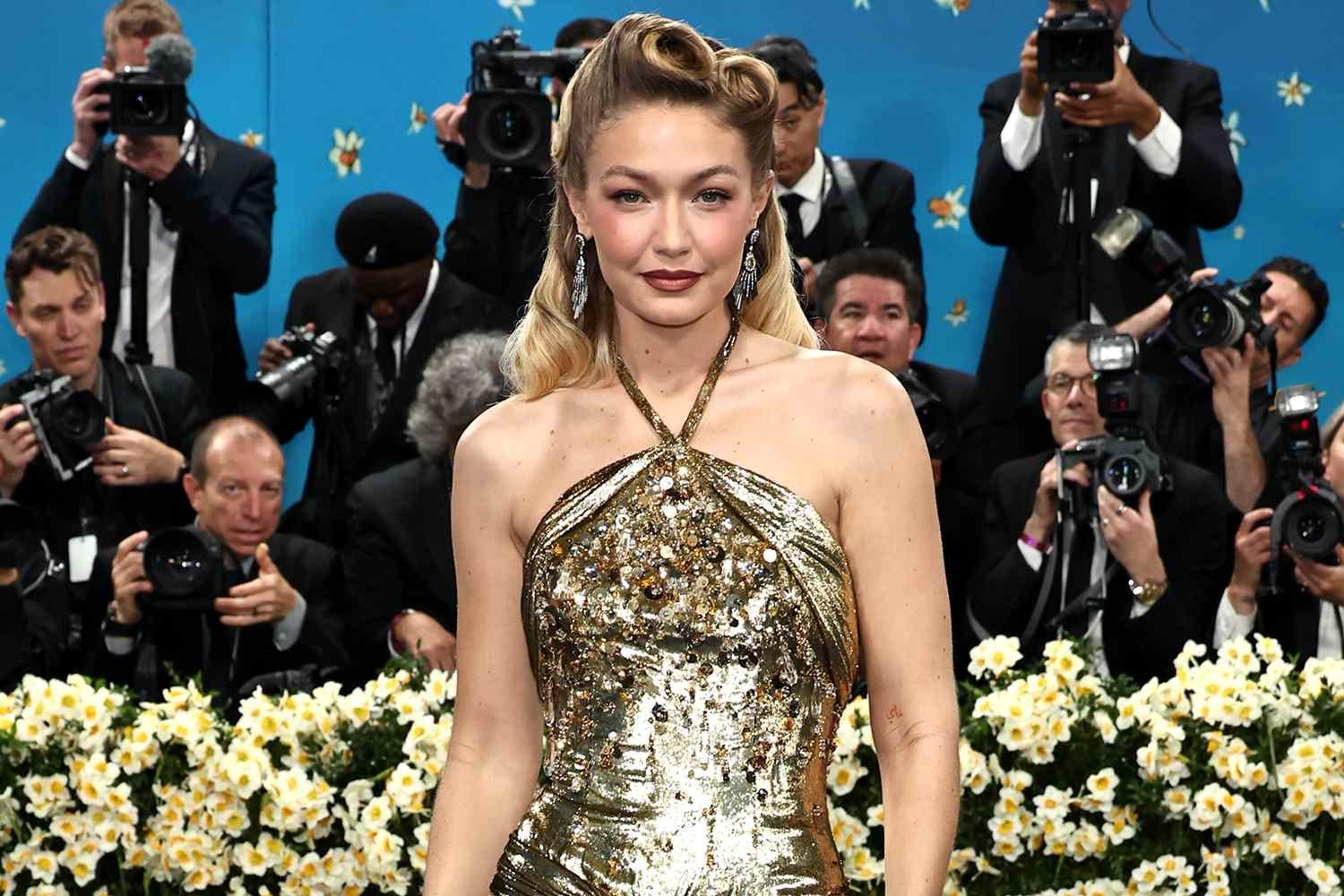
The 75th Primetime Emmy Awards showcased not only outstanding talent but also an array of captivating fashion moments on the red carpet. However, the fashion extravaganza did not end with the award ceremony. After the coveted Emmy Awards, celebrities shed their elegant gowns for slinkier looks, setting the stage for a glamorous after-party that redefined Emmy Awards fashion trends.
Wine-Hued Dresses
A Captivating Color Trend One of the standout Emmy Awards fashion trends that stole the spotlight at the after-party was the prevalence of wine-hued dresses. The rich, deep tones of wine-colored garments made a strong statement on the red carpet. Celebrities like Storm Reid, Beatrice Grannó, and J. Smith-Cameron embraced this captivating color trend, showcasing their individual styles with elegant sheath dresses, sheer lace skirts, and goddess-like umber gowns.
Celebrity Style Transformations at the After-Party
The transition from the red carpet to the after-party brought about intriguing style transformations. The stars, having celebrated their wins, let loose and danced the night away in outfits that reflected their vibrant personalities. From Storm Reid’s vintage chartreuse sheath dress to Quinta Brunson’s switch to oversized separates, the after-party witnessed a dynamic shift in fashion choices.
Emmy Awards Fashion Trends in Detail
Let’s delve into the details of some high-profile celebrities who made waves with their after-party fashion choices, contributing to the overall Emmy Awards fashion trends.
Storm Reid
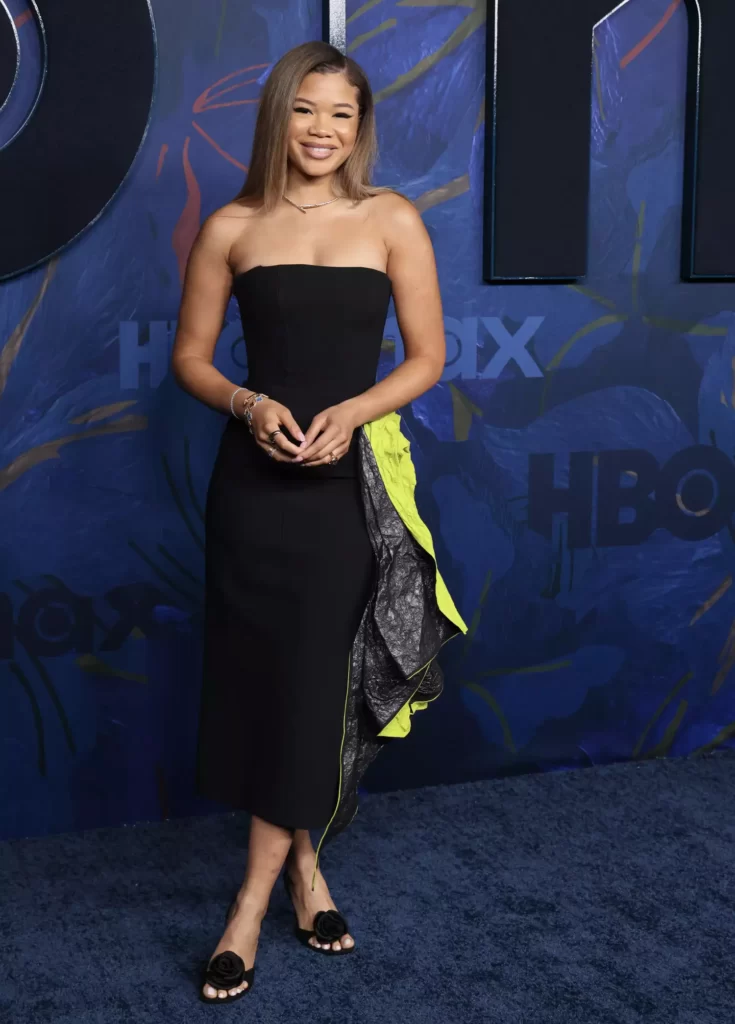
Storm Reid, a vision of elegance, embraced the wine-hued trend at the 2024 Emmy’s After Party. Her vintage chartreuse Maticevski dress, featuring a modern deconstructed bustle, perfectly captured the essence of Emmy Awards fashion trends. The deep wine tones of the dress added a touch of sophistication to her after-party look.
Beatrice Grannó
Beatrice Grannó made a bold style statement at the after-party by swapping her rosette-adorned Armani Privé Couture red carpet gown for an Alessandro Vigilante dress. The sheer lace skirt of her ensemble not only scored goth glam points but also aligned seamlessly with the captivating wine-hued trend, contributing to the overall fashion narrative of the evening.
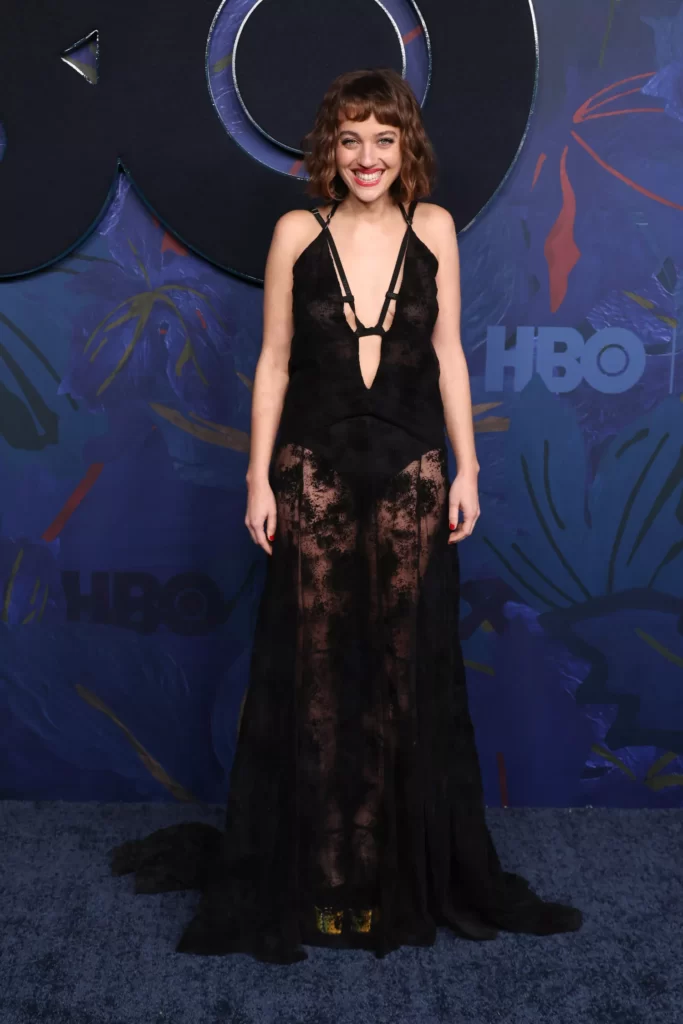
J. Smith-Cameron
J. Smith-Cameron, a member of the Succession cast, turned heads at the 2024 Emmy’s After Party. After a cheeky kiss from co-star Kieran Culkin, she swapped her elegant green-blue ballgown for a sun-spangled umber dress fit for a goddess. Her choice of dress not only showcased her individual style but also played into the prominent wine-hued trend observed at the after-party.

Quinta Brunson
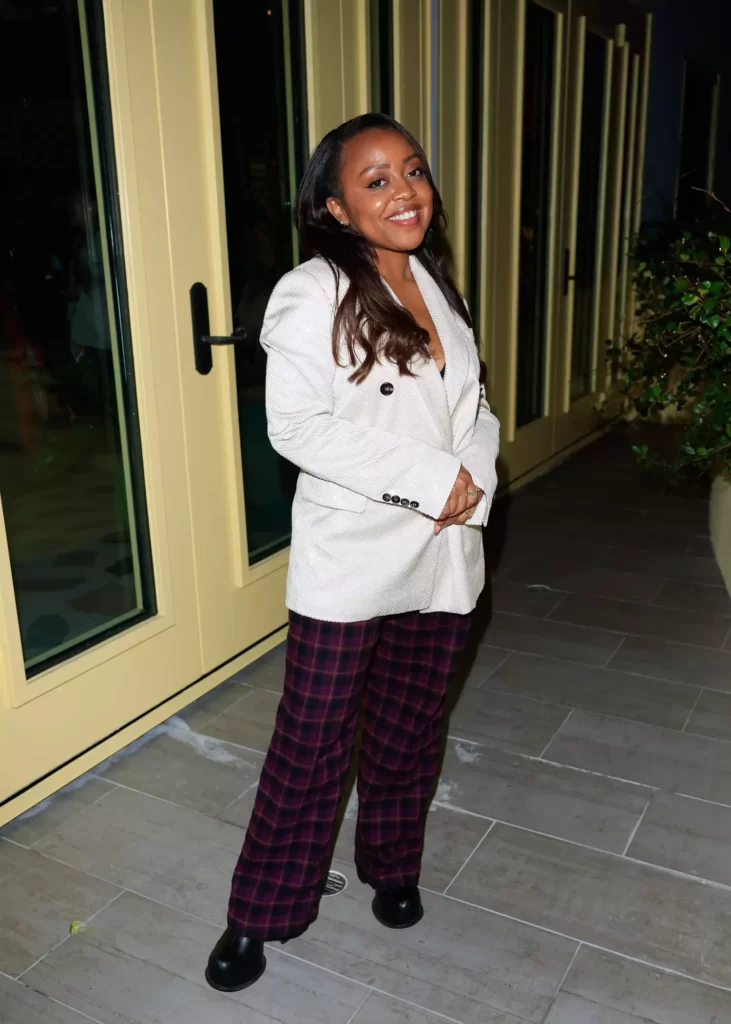
Emmy winner Quinta Brunson brought a breath of fresh air to the after-party with her style transformation. She slipped out of her couture midi dress and opted for oversized separates, showcasing versatility and a carefree spirit. This shift in style not only highlighted her individuality but also contributed to the dynamic nature of Emmy Awards fashion trends.
Jessica Williams
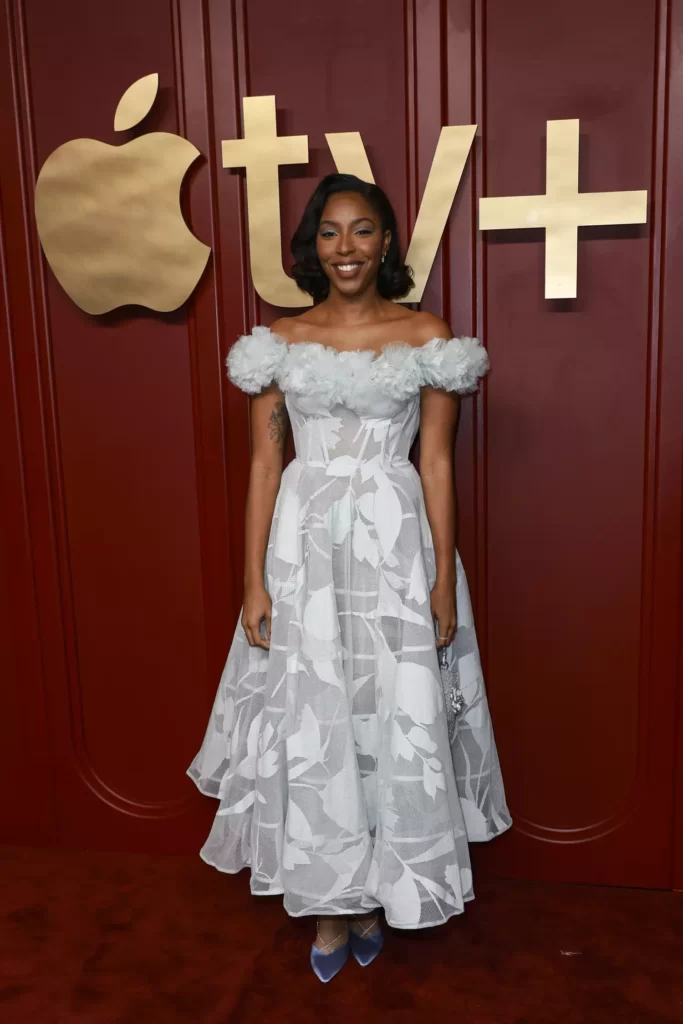
Jessica Williams, known for her black and white evening gown on the red carpet, embraced a different vibe at the 2024 Emmy’s After Party. She switched to a sheer off-the-shoulder midi-dress with rosette trim, staying on-trend and infusing a playful, contemporary element into her after-party look. Her fashion choices echoed the dynamic transformations witnessed at the Emmy Awards after-party.
Also Read: Style Meets Comfort: The Allure of Supesu’s Versatile Loungewear Collection
Aja Naomi King
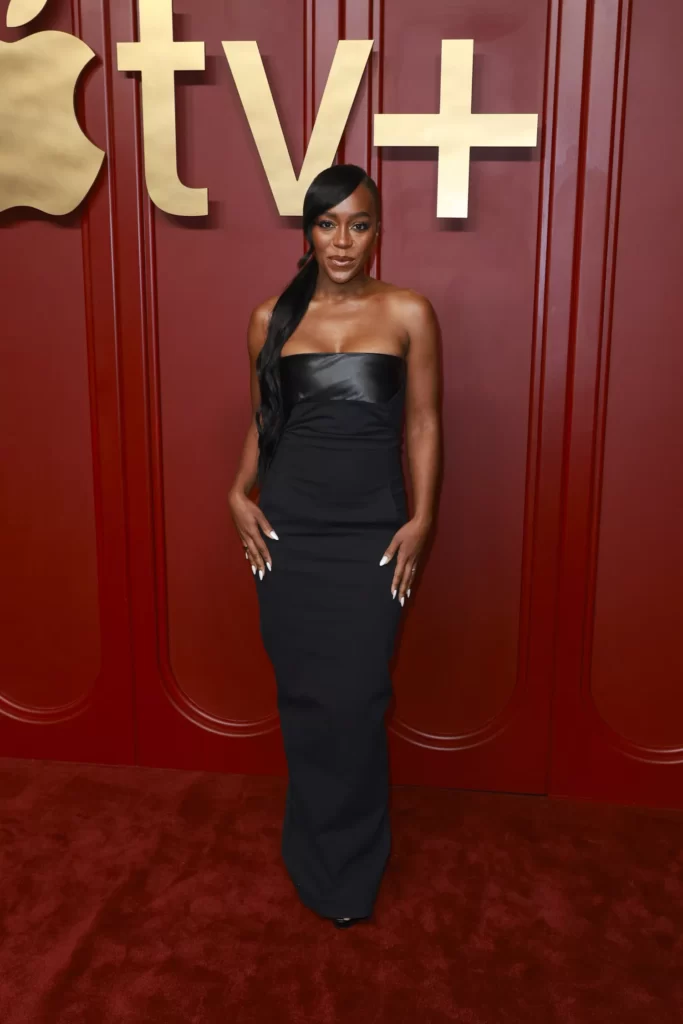
Aja Naomi King opted for a deceptively simple black sheath dress at the Emmy’s After Party, a choice that looked so good she could probably get away with murder. Her elegant yet understated ensemble contributed to the overall allure of wine-hued dresses, showcasing how this color trend transcends complexities and embraces simplicity.
Heidi Klum
Heidi Klum dazzled at the Emmy’s after-party in an aquamarine gown with a long, mermaid-worthy train. Her choice of vibrant color added a refreshing twist to the wine-hued trend, illustrating the diversity of fashion choices observed at the after-party. Klum’s ensemble epitomized the glamour associated with Emmy Awards fashion trends.

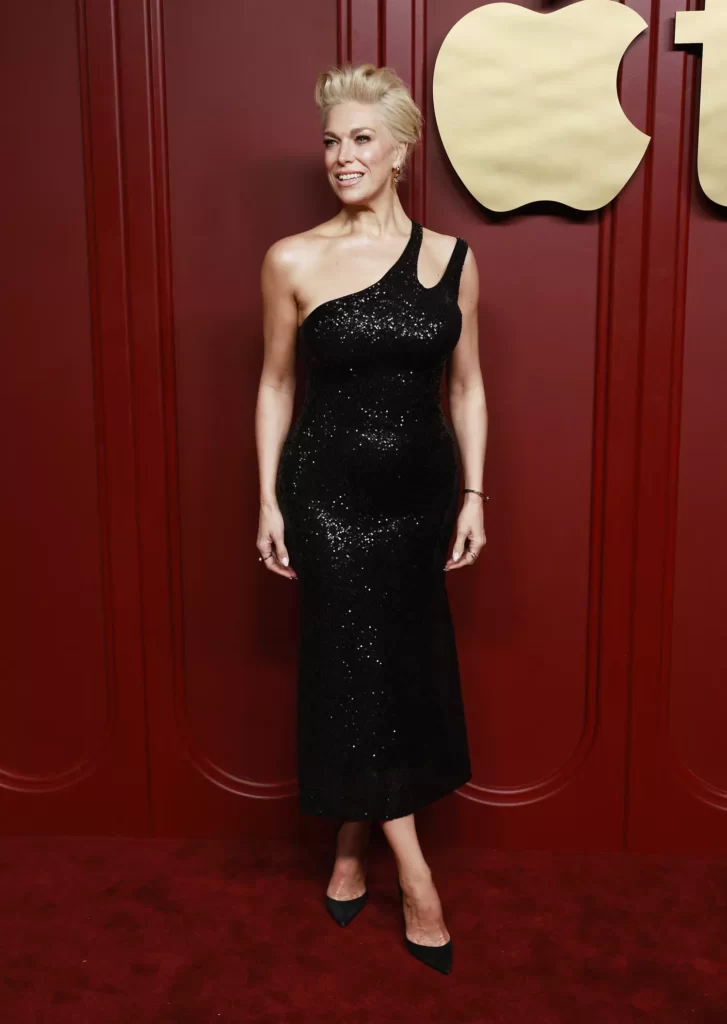
Hannah Waddingham
Hannah Waddingham made a memorable style transition at the 2024 Emmy’s After Party. Swapping out her seafoam Marchesa look for a black sequin number, she maintained the sparkle of her red carpet appearance while embracing a different color palette. Waddingham’s after-party ensemble encapsulated the versatility and dynamism inherent in Emmy Awards fashion trends.
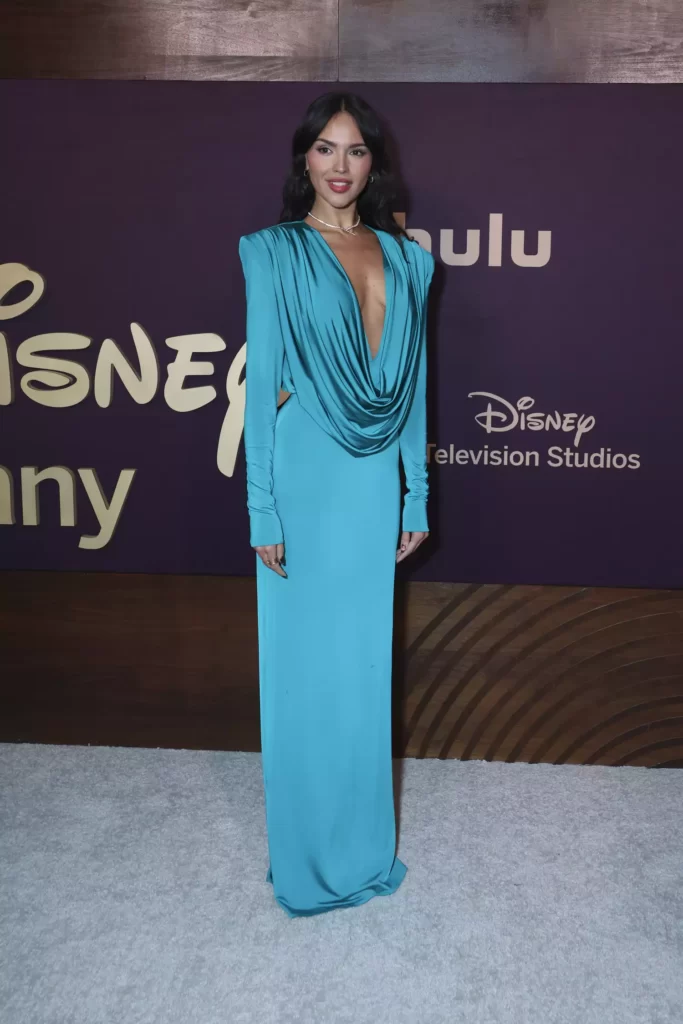
Eiza González
Eiza González opted for a vibrant shade of blue in a vivid Magda Butrym gown at the 2024 Emmy’s after-party. Her choice redefined our understanding of a cowl neck, adding a bold and contemporary touch to the overall fashion narrative. González’s ensemble contributed to the diversity of colors and styles observed at the Emmy Awards after-party.
Lizzy Caplan
Lizzie Caplan graced the 2024 Emmy’s after-party in a sheer crochet Dior gown. Her dress had all the drama and romance of her red carpet look, yet presented a breezier and no less intricate aesthetic. Caplan’s fashion choice highlighted the individuality of each star at the after-party, showcasing the transformative nature of Emmy Awards fashion trends.

Also Read: Unveiling Sustainability: A Deep Dive into Eco-Friendly Fashion Trends 2024
Robin Thede
Robin Thede made a striking entrance at the 2024 Emmys After Party by swapping her petal-pale corsetted Ines Di Santo ballgown for an equally impactful Ese Azenabor midi dress. Adorned with dazzling bronze paillettes, Thede’s outfit added a touch of glamour to the after-party, seamlessly aligning with the high-value “Emmy Awards fashion trends.
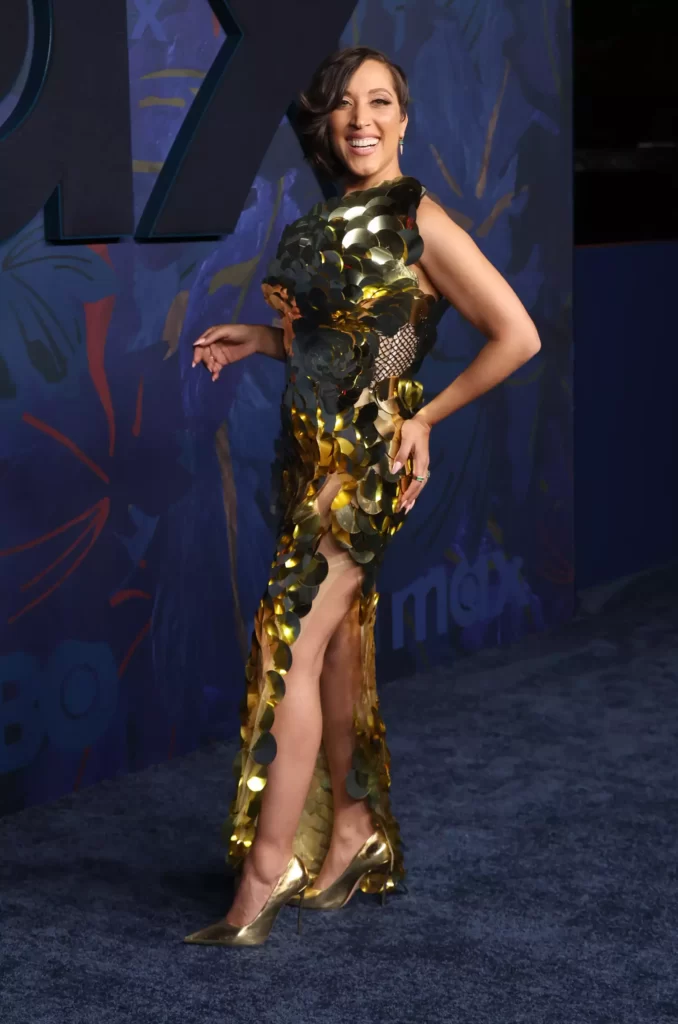
Paloma Cinco
Delivering an iridescent take on Old Hollywood glamour, Paloma Cinco looked dazzling in an asymmetrical sequined gown at the 2024 Emmy’s After Party. Her choice of outfit not only contributed to the overall allure of wine-hued dresses but also showcased a unique perspective on red carpet style, emphasizing the “Emmy Awards fashion trends.”
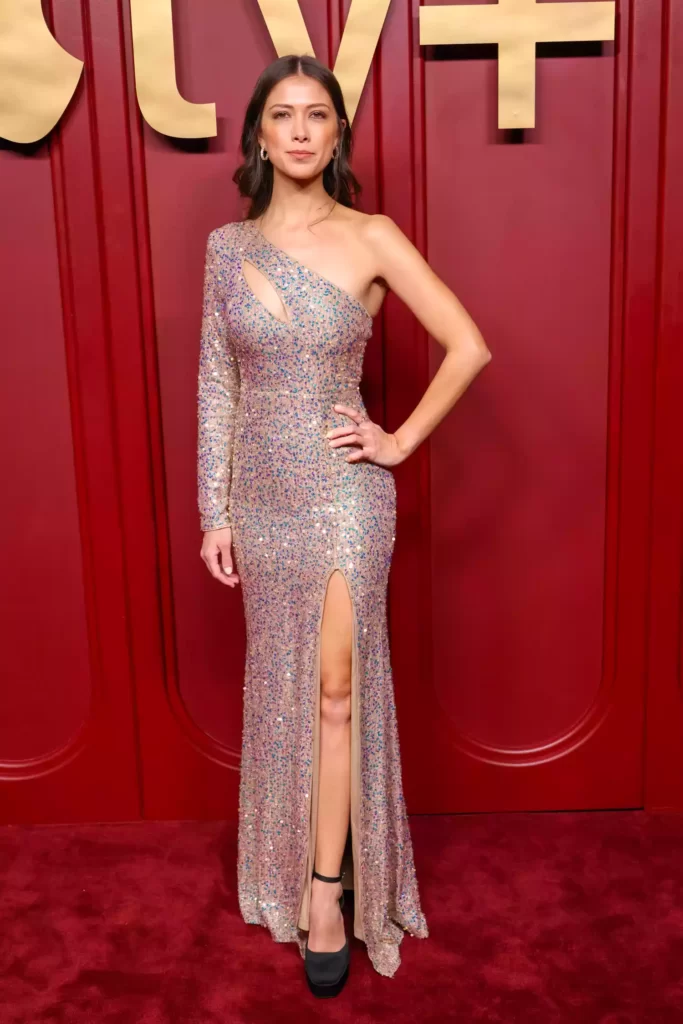
Karen Pittman
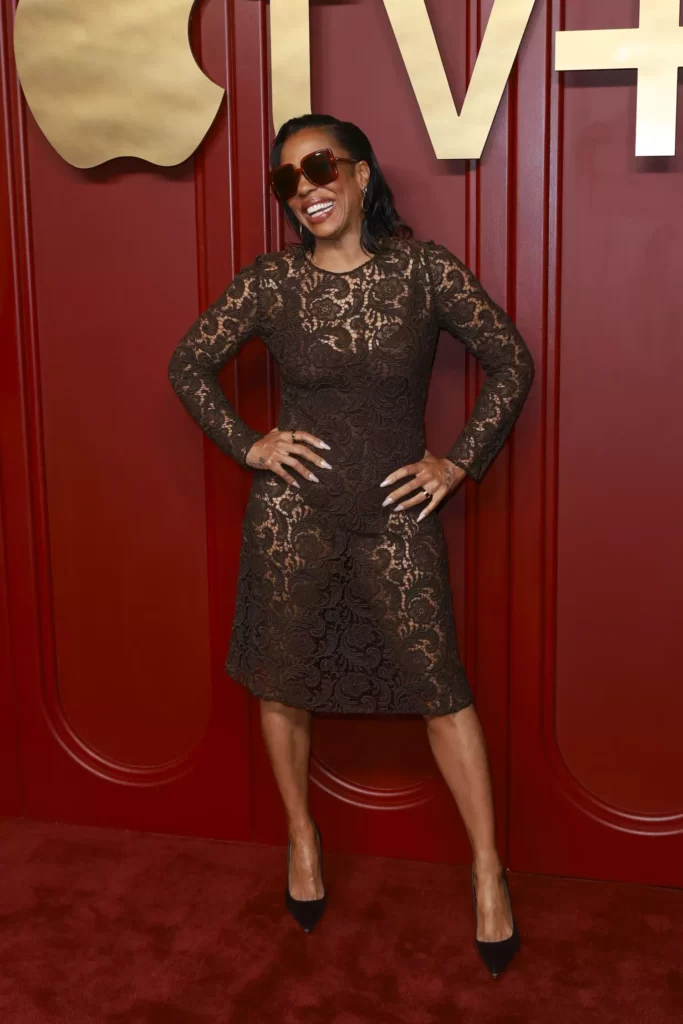
Karen Pittman opted for a short hemline when it came to her chocolatey sheer lace look at the 2024 Emmy’s After Party. The daring choice added a contemporary flair to the after-party fashion scene, highlighting the diversity of styles observed at the Emmy Awards. Pittman’s outfit resonated with the overarching theme of celebrity after-party fashion and the high-value “wine-hued dresses.”
Juliana Aiden Martinez
Juliana Aiden Martinez shone brightly in a scarlet gown with a slightly less full skirt than Sarah Snook’s Vivienne Westwood number, confirming that this vivid shade was one of the night’s trending colors. The scarlet gown not only aligned with the wine-hued trend but also showcased Martinez’s individual style, contributing to the “Emmy Awards fashion trends.”

Also Read: Upgrade Your Wardrobe with These Flannel Outfits Ideas
Bella Ramsey
The Last of Us star, Bella Ramsey, made a chic statement at the 2024 Emmy’s After Party. Swapping her forest green suit for a dapper black ensemble featuring a perfectly coordinated pair of black and white oxford shoes, Ramsey’s after-party look added a touch of sophistication and playfulness. Her outfit seamlessly integrated into the diverse array of styles witnessed at the Emmy Awards after-party, reinforcing the prominence of wine-hued dresses.

Concluding Thoughts: Capturing the Essence of Emmy Awards Fashion Trends
In conclusion, the 75th Primetime Emmy Awards after-party was a celebration not only of talent but also of fashion innovation. The prevalence of wine-hued dresses, the intriguing style transformations, and the overall dynamism of celebrity fashion choices contributed to an unforgettable night that redefined Emmy Awards fashion trends. From the red carpet to the after-party, the stars showcased their individual styles, leaving an indelible mark on the fashion landscape. As we reflect on this star-studded affair, it’s clear that Emmy Awards fashion trends are not confined to the red carpet—they extend to the after-party, where the true magic unfolds.
Sahil Sachdeva is an International award-winning serial entrepreneur and founder of Level Up PR. With an unmatched reputation in the PR industry, Sahil builds elite personal brands by securing placements in top-tier press, podcasts, and TV to increase brand exposure, revenue growth, and talent retention. His charismatic and results-driven approach has made him a go-to expert for businesses looking to take their branding to the next level.
You may like
Fashion
Why Fashion Illustrations Will Always Have a Place on Our Moodboards
Published
7 days agoon
April 10, 2026
Stepping out of my London hotel near Harvey Nichols, I expected the familiar grammar of luxury retail: mannequins frozen mid-gesture, campaign faces enlarged to abstraction. Instead, drawings darted across the glass—Jacky Blue’s sketches animated on screen, stretched beyond scale, rendered in thick, confident strokes that simultaneously had a doodle-like charm.
Fashion illustrations will always have a place on our moodboards. They capture emotion, movement, and personality in a way that feels deeply human. In a world flooded with perfect digital images and AI-generated visuals, these hand-drawn works continue to offer soul and spontaneity that no camera can replicate.
I was not new to the vocabulary of illustration. Fashion did not enter my life through proximity. It arrived obliquely, through cinema. Audrey Hepburn led me to Givenchy and Dior, and from there to Edith Head. What stayed were not only the finished garments, but the drawings that preceded them. I sketched obsessively through my years of science education, mostly in the margins of textbooks, copying silhouettes I could not access in any other way. When fashion felt unreachable, I drew it closer. Fashion illustrations have long functioned as a form of access for buyers and enthusiasts alike.
From early costume books at 19th-century couture ateliers to campaigns in Vogue, this language was how designers and their patrons communicated. When the industry accelerated, and photography made the process of creating images instant, illustration seemed to slip from the centre. Yet, a single held-back line can sometimes contain more feeling than an entire campaign. The legendary Italian fashion illustrator René Gruau understood this instinctively. His work for Dior, beginning with Miss Dior in 1947, did not merely advertise the clothing but conjured up an immersive world for the brand. A ballerina in a tutu; an ingenue’s hand resting lightly on a leopard’s paw; a woman, as seen from behind, hugging a huge bouquet, you could almost smell it. Gruau’s 20th-century drawings for Dior, Balenciaga, Schiaparelli, and Givenchy shaped how modern luxury learned to look at itself.
That sensibility carries forward most clearly today in the work of the English fashion illustrator David Downton. He built his reputation on drawings made fresh from Paris couture fittings each season, as well as on his live portrayals of illustrious figures—from Cate Blanchett to Linda Evangelista—rendered in his signature watercolour lines that convey an air of impenetrable glamour. His art has circulated so widely that it sits pinned to moodboards and framed in private homes, absorbed into the collective visual memory of fashion.
Downton arrived in Paris in 1996, just as John Galliano and Alexander McQueen were taking up their posts at Dior and Givenchy. “There was electricity in the air. I felt like I had entered Narnia and I knew I had found my métier,” says Downton. His work remains committed to being present, standing up, pacing, making decisions that cannot be undone. Downton muses, “It is an intimate experience. A mini love affair. Today, it takes an army to produce a portrait or a fashion photograph. But with a drawing, it is just you and the subject: time arrested.”
Milan-based Jenny Walton, trained in real-time observation, translates that energy into her own work, sketching runway shows not to record but to respond, creating images that are as much personal impression as reportage. Which is what the major brands, from Bergdorf Goodman to Prada, come to her for. Trained at the Parsons School of Design, where illustration was once central to fashion education, she learned to draw for hours, standing, capturing a gesture before it vanishes. Vintage references run naturally through Walton’s visual world, both in her personal style and in her illustrations. “Styles and items from the past immediately bring a warm sense of nostalgia to something new, making it feel so much more familiar and inviting,” says Walton.
Elsewhere in the world of fashion illustration, the tone shifts. New York–based Julie Houts approaches drawing not as reverence but as satire. Her images are populated by rats and fashion girls collapsed in fetal positions. Emotions spill and absurdity reigns. She sketched the industry’s contradictions, exposing its anxieties and excesses through witty text scrawled onto these illustrations. “Because fashion illustration is so limitless, it easily lends itself to pushing ideas to their most absurd, exaggerated conclusion.”
At the National Institute of Design in Ahmedabad, designer David Abraham was taught to emphasise drawing for its own sake—learning proportion, perspective, ratios and how to render material. How granite behaves differently from wood, chiffon from silk. These principles, he explains, are what make a drawing work. One half of the duo behind the label Abraham & Thakore, he insists that thinking begins when the hand moves across paper. Drawing is meditative. Once he picks up a pencil, ideas start to form. In that sense, illustration becomes part of the visualisation process itself.
At their label, sketches are iterative and ongoing. A doodle might lead to the development of a weave in Telangana, which then returns altered through material and technique. When the fabric comes back from the loom, Abraham sketches again to understand movement, drape and proportion. Where should a motif sit on the body? Is it too large or too small? These decisions, he says, only become clear when he sketches. When everyone understands the drawing, the garment works. If they don’t, it doesn’t.
Fashion illustrations were my portal into the fashion industry, but you rarely see them anywhere anymore. In India, it feels almost extinct. Walton speaks candidly about the challenges facing fashion illustrations today. “As commissions have diminished, fewer young artists can study or sustain the practice professionally. Illustration takes time,” she notes, and without paid work, “it becomes difficult to justify”.
But, it appears, the countertrend is already underway. As artificial intelligence accelerates what can be produced cheaply, there is a call to return to the nuance and imperfection of what humans create. Major houses are paying attention: Daniel Roseberry’s illustrations for Schiaparelli have demonstrated that the drawn line sits central to his work at the couture house. In January, Hermès introduced its theme for 2026 with hand-drawn, animated illustrations by French artist Linda Merad. The immediacy that Downton demonstrated has begun to flourish again in the front rows of fashion shows today, from illustrators like Katja Foos, Miyuki Ohashi and Steve Clarus Quiles, who sketch live at shows—from Balenciaga and Valentino to Mathieu Blazy’s first show at Chanel. Brands like Acne Studios, Gauri & Nainika and Lanvin have, in recent years, returned to commissioning illustrators to rethink how their brands speak. Beyond ateliers, illustration thrives in unexpected spaces: Instagram illustrators such as Rameen Rizvi and Simona Alvarez render their daily fit checks as mini versions of themselves, Lizzie McGuire–style, blending photography and drawing.
Fashion illustrations will always have a place on our moodboards because they bridge the gap between idea and reality with warmth and personality. Recently, I came across a post by a young Germany-based illustrator and motion designer, Haojing Simota: “When I was a kid, I dreamed of designing clothes and watching models strut down a runway in my creations. Then life happened, bills happened and that dream quietly packed itself away in a drawer. [But] recently I realised: dreams don’t disappear they change shape. With drawing and animation, why not build the runway I once imagined, brush by brush, frame by frame?”
It is heartening to see the return of wonder to fashion. “Because we have all become so accustomed to digital images, there is an indescribable energy in seeing an illustrator’s hand in an image,” says Houts, insisting that “ideas can feel more distilled or potent” when communicated this way.
Drawing is intimate a conversation between hand, eye and mind. In a fast-moving world, the hand still knows how to make an idea feel alive. Fashion illustrations will always have a place on our moodboards.
Fashion
Met Gala Magic: Where Fashion Becomes Immortal and Style Turns Into Art
Published
1 week agoon
April 8, 2026
Every year, the Met Gala isn’t just an event, it’s a spectacle where fashion transcends clothing and becomes cultural history. On the first Monday in May, the world watches as celebrities ascend the iconic steps of the Metropolitan Museum, not merely dressed to impress, but dressed to define an era.
This isn’t your typical red carpet. There are no safe choices here. No playing it subtle. The Met Gala demands more, it demands vision, risk, and storytelling stitched into every seam. Celebrities arrive in custom creations that interpret the annual exhibition theme, turning themselves into living, breathing works of art. The goal isn’t fleeting applause; it’s legacy.
And only a select few achieve it.
Think of the moments that still dominate fashion conversations years later, the kind that stop time and spark endless inspiration. These are not just outfits; they are statements that blur the line between costume and couture. The Gala’s magic lies in its ability to encourage fearless creativity, giving rise to looks that would feel out of place anywhere else, yet belong perfectly here.
Inside the museum, the Costume Institute serves as both archive and muse. Guests draw inspiration from decades of avant-garde design, pushing boundaries in ways that feel theatrical, rebellious, or even surreal. It’s the one night where excess is celebrated, where drama is expected, and where fashion becomes performance art.
With “Fashion is Art” as this year’s theme, anticipation builds for bold, unforgettable statements.
Picture the spectacle: dramatic trains requiring entire teams to carry, layered ensembles that transform mid-carpet, or headpieces that defy gravity and convention. Every detail is intentional. Every look tells a story. Some are bold and extravagant, others subtle and intellectual, but the one rule remains constant: never be boring.
The beauty of the Met Gala lies in its unpredictability. One moment you’re witnessing grandeur and opulence; the next, a clever twist or a deeply personal tribute. It’s a space where designers and celebrities collaborate to challenge norms, redefine beauty, and occasionally, shock the world.
This year, anticipation is at an all-time high. With the exhibition theme “Costume Art” and a dress code centered on the idea that “Fashion is Art,” expectations are soaring. The theme opens the door to limitless interpretation, will we see sculptural silhouettes, painterly fabrics, or conceptual pieces that redefine what clothing can be?
Adding to the excitement are the evening’s co-chairs, icons known for their bold style choices and commanding presence. Their influence alone promises a night of unforgettable fashion moments.
Until the curtain rises on the first Monday in May, speculation will continue to swirl. But one thing is certain: when those doors open and the first look is revealed, the world will once again be reminded why the Met Gala remains fashion’s most dazzling stage, where style doesn’t just shine, it lives on forever.
Fashion
Dolce & Gabbana Faces Financial Crossroads as Luxury Slowdown Sparks Debt Talks
Published
2 weeks agoon
March 31, 2026
Weaker global demand and geopolitical tensions push the iconic fashion house to renegotiate with lenders
Industry-wide strain signals a deeper shift in luxury markets as even top brands feel the squeeze
The glitter of high fashion is dimming, at least for now. Even a powerhouse like Dolce & Gabbana is feeling the pressure as cracks begin to show beneath the surface of the global luxury market. Known for its bold Mediterranean aesthetic and opulent designs, the Italian label is now stepping into a more sobering spotlight: debt negotiations.
Behind the glamour, the company has quietly begun fresh discussions with lenders, working alongside financial adviser Rothschild & Co.. The move comes as slowing global demand for luxury goods starts to weigh heavily on earnings, forcing the brand to reassess its financial footing.
At the heart of the issue lies roughly €450 million in bank debt, a figure that includes €150 million borrowed last year to fuel ambitious expansion plans. That strategy, aimed at preserving the brand’s independence while growing its footprint in beauty and real estate, now faces a tougher reality. While lenders had previously granted flexibility on certain debt conditions, the current environment has made those terms harder to sustain.
What’s driving this shift isn’t just a cyclical slowdown. The luxury sector is navigating a perfect storm: cooling consumer demand, inflationary pressures, and rising geopolitical uncertainty. The recent tensions stemming from the Iran conflict have further unsettled key markets, particularly in the Middle East, a region that has long been a cornerstone of luxury spending.
For Dolce & Gabbana, the timing is critical. Talks with lenders are still in early stages, with no firm agreements yet in place. But the goal is clear: secure breathing room on debt covenants and stabilize finances before conditions worsen.
The brand’s situation is far from isolated. Across the industry, other major players are also recalibrating. Valentino, for instance, required a €100 million capital injection from its owners after breaching debt terms. Meanwhile, consolidation is reshaping the competitive landscape, with Prada acquiring Versace, and Giorgio Armani outlining plans to partially divest his namesake empire.
These developments point to a broader transformation underway in luxury fashion, one where scale, diversification, and financial resilience are becoming as important as creativity.
According to industry estimates, global luxury sales dipped by 2% in 2025, reflecting a market that is no longer immune to economic headwinds. While there were early signs of recovery, recent geopolitical disruptions have cast fresh uncertainty over what lies ahead.
For now, Dolce & Gabbana stands at a pivotal juncture. The brand that once thrived on excess and exuberance must now navigate restraint and recalibration. Whether it emerges stronger, or becomes another cautionary tale, will depend on how it balances ambition with financial discipline in an increasingly unpredictable world.
Fashion
The Real Story of Fashion in Northeast India Goes Far Beyond Beauty Pageants and Thrift Clichés
Published
3 weeks agoon
March 26, 2026
Fashion
Behind the Curtain: Capturing the Energy of Paris Fashion Week Fall 2026
Published
1 month agoon
March 7, 2026
Paris once again proved why it remains the heart of the global fashion industry as the Fall 2026 shows brought together creativity, craftsmanship, and cultural influence under one roof. While the runway presented polished looks and carefully curated collections, the real magic often unfolded behind the scenes. Backstage at Paris Fashion Week, designers, stylists, models, and photographers worked in a whirlwind of activity to transform creative visions into unforgettable moments.
Among those documenting the energy backstage was renowned street-style photographer Acielle of Style Du Monde, whose lens captured candid moments that often go unseen by the audience. From final outfit adjustments to makeup artists applying finishing touches, the backstage environment reflected both tension and excitement as models prepared to step onto the runway.
The Fall 2026 season highlighted a blend of classic tailoring and bold experimentation. Designers explored dramatic silhouettes, oversized coats, structured jackets, and layered textures that signaled a shift toward statement-making outerwear. Rich fabrics such as velvet, leather, and wool dominated the collections, reflecting the season’s emphasis on warmth and sophistication. At the same time, unexpected details—metallic embellishments, exaggerated collars, and sculptural accessories—added a futuristic edge to traditional fall staples.
Backstage beauty trends also played a significant role in defining the season. Makeup artists focused on glowing skin, graphic eyeliner, and deep-toned lip colors that complemented the dramatic clothing designs. Hairstyles ranged from sleek, minimalist buns to voluminous waves, demonstrating the industry’s ongoing fascination with balancing simplicity and boldness.
Beyond the fashion itself, Paris Fashion Week continues to serve as a meeting point for global creativity. Influencers, celebrities, editors, and buyers gathered not only to witness the latest collections but also to set the tone for upcoming trends. The backstage area became a hub of collaboration where stylists exchanged ideas, photographers documented fleeting moments, and designers made last-minute decisions before the show began.
Photographs from backstage offer a unique perspective on the fashion world. Unlike the perfectly staged runway presentations, these images reveal the human side of fashion—the nervous anticipation of models, the intense concentration of makeup artists, and the collaborative effort required to bring a collection to life. These moments remind audiences that behind every glamorous runway show lies an intricate process involving hundreds of professionals.
The Fall 2026 shows in Paris also reflected broader conversations within the industry about sustainability, craftsmanship, and individuality. Many designers incorporated responsibly sourced materials and emphasized timeless designs intended to last beyond a single season. This shift signals a growing awareness among fashion houses of their role in shaping a more thoughtful and responsible future for the industry.
As the lights dimmed and the final looks walked the runway, the backstage buzz gradually faded. Yet the images captured during those hectic moments remain a powerful reminder of fashion’s dynamic nature. They reveal a world where artistry meets precision and where creativity thrives in the seconds before the spotlight appears.
In many ways, backstage at Paris Fashion Week is where fashion truly comes alive—raw, energetic, and endlessly inspiring.
Fashion
Met Gala 2026 Announces Bold Dress Code: “Fashion is Art”
Published
2 months agoon
February 25, 2026
The Metropolitan Museum of Art has officially revealed the dress code for the 2026 Met Gala, scheduled for Monday, May 4: “Fashion is Art.” This powerful and open-ended theme aligns perfectly with the Costume Institute’s highly anticipated spring exhibition, “Costume Art,” curated by Andrew Bolton. The exhibition will showcase nearly 400 extraordinary objects, placing historical and contemporary garments in direct conversation with paintings, sculptures, decorative arts, and other masterpieces spanning more than five millennia. Installed in the museum’s new Condé M. Nast Galleries, the display explores the “dressed body” as a timeless artistic medium that bridges cultures, eras, and disciplines. Leading the evening as co-chairs are global icons Beyoncé, Nicole Kidman, Venus Williams, and Anna Wintour, whose diverse fields—music, film, sports, and fashion publishing—perfectly embody the interdisciplinary spirit at the heart of this year’s celebration.
Far more than a red-carpet directive, “Fashion is Art” invites attendees to treat their outfits as living artworks, encouraging bold experimentation with sculptural forms, trompe l’œil illusions, handcrafted details, performance-inspired elements, and conceptual references drawn from Renaissance portraiture, modernist abstraction, ancient artifacts, and beyond. In an era dominated by fast fashion and digital duplication, the theme serves as a powerful reminder of fashion’s artistic legitimacy, craftsmanship, and ability to convey identity, politics, and personal narrative. Designers and celebrities are already anticipated to push creative boundaries, resulting in one of the most conceptually ambitious red carpets in recent memory. As speculation builds around guest interpretations from classical muse reimaginings to radical deconstructed forms, the 2026 Met Gala is set to become not only a dazzling spectacle but also a profound cultural statement about creativity, authorship, and the enduring power of the dressed body as art in motion.
Fashion
True Sanity: The Nocturnal Rebellion Rewriting the Rules of Luxury Jewelry
Published
2 months agoon
February 23, 2026
How Amit Jhalani dismantled an industry built on opacity, and built a brand that feels like midnight, moves like culture, and prices like it actually respects you.
The Jewelry Industry Has a Dirty Secret
Here is something the fine jewelry world doesn’t want you to think about too carefully: the moment you walk out of most jewelry stores, you’ve already lost up to 90% of what you just paid. Ninety percent. Let that number breathe for a second. When you drive a new car off the lot, the common wisdom says you lose 25 to 35 percent of its value. That sting is well-known, almost a cultural punchline. But jewelry? The depreciation is so extreme, so deliberately hidden behind velvet curtains and champagne flutes, that most consumers never even realize it happened until they try to resell. By then, the shock is personal.
This is the world Amit Jhalani stepped into, not as an outsider lobbing criticism from the cheap seats, but as someone who understood the mechanics from the inside. His education didn’t come from business school case studies. It came from doing something deceptively simple: he started buying competitors’ finished pieces, bringing them back to his bench, and breaking them down to their raw components. Every setting dismantled. Every stone was weighed. Every gram of gold was measured against what the customer had been charged.
What he found wasn’t just a generous markup. It was an architecture of exploitation, engineered with surgical precision to extract maximum dollars based on two variables that have absolutely nothing to do with craftsmanship, design, or material quality: how the customer looks, and how much they appear willing to spend. Walk into certain stores wearing a designer watch and driving a German sedan, and the number on the tag adjusts itself accordingly, not because the product changed, but because the perception of your wallet did.
That revelation didn’t just inform a business model. It ignited one.
Anatomy of a Rip-Off
The fat in the jewelry industry isn’t subtle, it’s systemic. Consider lab-grown diamonds, which have become one of the market’s most telling case studies in the gap between cost and price. A lab-grown diamond that costs a manufacturer roughly $50 to $200 per carat routinely hits retail shelves at $1,000 per carat or more. That’s not a healthy margin. That’s a five-to-ten-times multiplier dressed up in marketing language about “ethical luxury” and “sustainable brilliance.” The stone is real. The science is real. The price? That’s theater.
And the theater extends far beyond diamonds. Jhalani saw it clearly once the components were on the table. The gold content in many pieces didn’t justify the number. The stones didn’t justify the number. The design work, however skilled, didn’t come close to justifying the number. What justified the number was everything around the product: the lighting, the sales associate’s practiced warmth, the way your partner’s eyes lit up across the display case, and most insidiously, the snap judgment about your budget based on the watch on your wrist, the handbag on your arm, or the car you pulled up in. The jewelry industry, at its worst, is a profiling operation with a very expensive gift bag.

From the Emerald Rings Collection to the Sapphire Collection, every piece carries weight in grams and in meaning.
The practice is so deeply embedded that most people in the trade don’t even question it. Margins of 800%, 1,000%, and even higher are defended as “industry standard.” The customer, wrapped in the emotion of the purchase, rarely pushes back. And the ones who do? They’re steered toward “entry-level” pieces that still carry the same inflated mathematics, just with smaller numbers. The game stays the same regardless of the price point.
“When I saw what was inside versus what was on the receipt,” Jhalani has said, “I couldn’t unsee it. And I couldn’t keep selling the lie.”
Born After Dark: The TrueSanity Vibe
TrueSanity.com didn’t arrive with a pastel palette and a polite press release. It showed up at midnight, dressed in black, with a manifesto.
The brand’s nocturnal aesthetic is intentional and unapologetic. Dark, moody, steeped in the visual language of nightlife and after-hours culture, TrueSanity looks and feels like the kind of brand that was conceived at 2 a.m. when the filters come off, and only the truth remains. The website isn’t just a storefront; it’s an atmosphere. The photography leans cinematic. The palette runs deep- blacks, charcoals, the occasional flash of gold that catches light the way a ring catches your eye across a crowded room. Every touchpoint communicates something that most jewelry brands are terrified to project: edge.
This isn’t accidental branding. It’s a declaration. In a market saturated with soft pinks, serif fonts, and imagery of women laughing in sunlit meadows, TrueSanity chose darkness – not as a gimmick, but as a frequency. The nocturnal vibe speaks to the person who thinks differently after midnight, who trusts the version of themselves that exists when the performance of daytime falls away. It’s aspirational without being pretentious. It’s seductive without being hollow.
But beneath the aesthetic is something far more radical: the Transparency Manifest. TrueSanity doesn’t just sell jewelry, it publishes what goes into it. The brand has staked its identity on the principle that customers deserve to know exactly what they’re paying for, down to the material costs, the labor, and the margin. In an industry where opacity isn’t a flaw but the actual business model, this level of openness isn’t just refreshing. It’s confrontational. It’s a dare. The same ethos extends to sourcing: TrueSanity uses recycled gold, Kimberley Process-certified diamonds, and maintains direct supply chain relationships. You can read about their commitment to ethical sourcing and sustainability in full on their website.
The Transparency Manifest is TrueSanity’s line in the sand. It says: we are not hiding anything because we don’t need to. The product speaks. The price is honest. If that makes competitors uncomfortable, good. Discomfort is the first sign that something needs to change.
Luxury Without the Lie
Here is where TrueSanity’s positioning becomes genuinely interesting, and where lesser brands would have fumbled: the company refuses to compete on price. That might sound contradictory for a brand built on exposing industry markups, but it’s actually the sharpest strategic decision Jhalani has made. A price war is a race to the bottom, and the bottom is where quality, craftsmanship, and meaning go to die. TrueSanity isn’t trying to be the cheapest option on the shelf. It’s trying to be the most honest one.
The difference matters. Cheap jewelry tells the world you settled. Honest jewelry tells the world you chose wisely. TrueSanity occupies a space very few brands have managed to claim: genuinely luxurious, emotionally resonant, and financially sane. The pieces are designed to carry weight, not just in grams, but in meaning. This is jewelry for the proposal that makes your hands shake. For the anniversary that almost didn’t happen. For the moment, you decide to stop waiting for permission and buy yourself something extraordinary simply because you’ve earned it.
From the Morganite Rings Collection to Black Diamonds, every piece carries weight in grams and in meaning.
TrueSanity understands something fundamental that traditional luxury houses have spent decades trying to obscure: luxury, at its core, is emotional. It’s the feeling. It’s the story. It’s the crazy, passionate love that makes you do irrational things, except that with TrueSanity, the price isn’t one of them. You get to keep the magic and lose the manipulation. That’s not a compromise. That’s an upgrade. Whether you’re drawn to the bold, rule-breaking energy of the Insanity Collection or the timeless refinement of True Classics, the range speaks for itself. Explore the full TrueSanity collections and see what honest luxury actually looks like.
The brand doesn’t whisper. It doesn’t beg you to believe it’s worth your attention. It walks into the room with the quiet confidence of someone who has nothing to prove and nothing to hide. That energy part defiance, part devotion, is what’s turning TrueSanity from a jewelry company into a cultural signal.
A Following, Not Just a Customer Base
Brands talk endlessly about “community.” Most of them mean an email list with a 12% open rate. TrueSanity is building something different: a following united by a shared frustration with being overcharged and underestimated, and a shared appetite for beauty that doesn’t require a second mortgage or a crisis of conscience.
The audience TrueSanity attracts isn’t bargain-hunting. These are taste-driven, style-conscious consumers who have simply decided that being smart with money and wanting beautiful things are not mutually exclusive propositions. They’re the couple who researches before they buy. They’re the self-made professional who knows the difference between cost and value. They’re the person who Googled “why is jewelry so expensive” at 1 a.m. and ended up on TrueSanity’s site, reading the Transparency Manifest with widening eyes, and thinking: finally, someone said it.
That’s the nocturnal vibe in action. TrueSanity finds its people in the quiet hours, when the noise of the marketplace dies down, and the questions get real. It’s a brand built for the wide-awake for people who refuse to sleepwalk through the biggest purchases of their lives.
The Bottom Line That Isn’t About the Bottom Line
The conventional jewelry industry operates on a simple, cynical bet: that emotion will override reason. The significance of the moment the engagement, the milestone, the declaration of love, will make you stop asking questions about the number on the tag. For decades, that bet has paid off beautifully for insiders and painfully for everyone else.
TrueSanity’s wager is the opposite: that you can honor the emotion and respect the intelligence of the person feeling it. That luxury and transparency are not enemies but natural allies. That a brand can be dark, moody, and dripping with atmosphere while also being the most honest transaction you’ve ever had. That crazy love and clear thinking can coexist in the same purchase.
Amit Jhalani didn’t set out to burn the jewelry industry down. He set out to build something that made the old way look absurd by comparison. With TrueSanity, the absurdity is becoming impossible to ignore. The old guard can keep profiling customers, inflating margins, and hoping nobody does the math. But somebody did. And now, everybody can.
The lights are on. The manifest is public. The vibe is midnight.
And the jewelry? It’s exactly what it should be: beautiful, real, and honestly priced. Welcome to True Sanity.
Read the Transparency Manifest • Explore Collections • Shop Engagement Rings
Fashion
Rachel Scott Unveils Visionary First Collection for Proenza Schouler at NYFW
Published
2 months agoon
February 16, 2026
At New York Fashion Week, Rachel Scott presented her debut collection as creative director of Proenza Schouler, marking a fresh chapter for the brand.
When she stepped into the role last year, following founders Jack McCollough and Lazaro Hernandez’s departure to lead Loewe, the duo expressed excitement about Scott ushering in a new era. They highlighted her Jamaican-American background as a way to infuse the label with a broader, global viewpoint, combined with her strong technical expertise and unique creative voice.
Scott had already built a strong reputation through her own label, Diotima, a consistent presence at NYFW since its launch in 2021. Diotima earned significant recognition, including the 2024 CFDA American Womenswear Designer of the Year Award. Her work there blends traditional Jamaican craftsmanship with modern silhouettes, emphasizing slow fashion and artisanal techniques.
Elements of that philosophy appear to carry over into her first full collection for Proenza Schouler. Titled “The First Women’s Collection by Rachel Scott,” the Fall/Winter 2026 lineup acts as a tribute to women—particularly the dynamic women of New York. It functions almost like a complete wardrobe, spanning everything from elegant evening pieces and professional office attire to relaxed everyday looks.
Signature elements from McCollough and Hernandez’s era persist in subtle ways, such as sharp, sleek tailoring seen in flared pantsuits and structured coordinates. At the same time, Scott reinterprets the brand’s global-minded customer—one who doesn’t chase flawless polish. This vision shines through in twisted gown silhouettes, fringed footwear, and inventive button-down details that add texture and character.
Fashion
Philippine Leroy-Beaulieu Masters the Parisian Party Dress
Published
4 months agoon
December 17, 2025
The fifth season of Emily in Paris is set to premiere on Netflix later this week, promising plenty of romance, drama, and stylish escapades—though this time around, the action shifts to Rome, trading croissants and cafés for pasta and la dolce vita.
At the Paris premiere this week, the show’s stars turned heads on the red carpet. Lily Collins, Philippine Leroy-Beaulieu, and Ashley Park appeared as a glamorous trio, channeling timeless Hollywood elegance.
Collins opted for a dramatic plunging gown from Armani Privé, and Park chose a vibrant red strapless dress by Dolce & Gabbana. Yet it was Leroy-Beaulieu who truly captured the essence of French sophistication: The actress wore a sheer black lace mini dress featuring a dramatic ruffled train, paired with polka-dot tights and classic ankle-strap heels.
What makes this look so quintessentially Parisian? It’s all about understated refinement— the black lace offers subtle allure with its sheer fabric and short hem, yet the overall silhouette remains elegant and enduring. She casually draped a fluffy fur coat over her arm, letting it trail effortlessly behind her. In Paris, true style always feels relaxed and unforced, n’est-ce pas?
While the series centers on Emily and Lily Collins shines as a red-carpet star, Leroy-Beaulieu proves she’s the ultimate authority on French chic, especially with that local edge. Her sleek, confident ensemble evokes late-night outings to a cozy Parisian bistro for wine and conversation.
Fashion
25 Fashion Hacks You Need to Know in 2025 to Transform Your Style
Published
4 months agoon
December 8, 2025
Fashion trends evolve rapidly, but style is timeless. In 2025, staying ahead of the curve isn’t just about following trends—it’s about mastering fashion hacks that make your wardrobe smarter, your outfits more polished, and your day-to-day dressing effortless. Whether you’re a fashion enthusiast, a busy professional, or someone looking to elevate your style, these 25 fashion hacks you need to know will transform your approach to fashion forever.
1. Layer Like a Pro
Layering isn’t just for cold weather. Combine textures and colors strategically to create depth in your outfit. Lightweight jackets, cardigans, and scarves can instantly elevate your look.
2. Invest in Timeless Staples
A well-fitted blazer, crisp white shirt, and perfect pair of jeans never go out of style. Use these staples as your wardrobe foundation and build around them with trends.
3. Roll Your Sleeves Strategically
Rolling sleeves can make oversized tops look tailored and give casual outfits a polished edge. Pro tip: roll sleeves to just below the elbow for a professional yet effortless vibe.
4. Accessorize Boldly
Statement jewelry, colorful handbags, and chic belts can instantly refresh your outfit. Don’t be afraid to experiment with bold accents that reflect your personality.
5. Master the Power of Monochrome
Wearing one color head-to-toe creates a sleek, elongated look. Mix textures within the same color palette to avoid a flat appearance.
6. Tuck to Perfection
Partial tucks, front tucks, and side tucks can transform oversized tops and tunics, creating a flattering silhouette without extra tailoring.
7. Mix High and Low Fashion
Pair luxury items with budget-friendly pieces to achieve a balanced, chic look. This hack ensures your style looks curated without breaking the bank.
8. Optimize Your Footwear
The right shoes can make or break an outfit. Invest in versatile shoes like white sneakers, black boots, and nude heels to complement multiple outfits.
9. Experiment with Prints
Mixing prints can be intimidating, but matching color tones or patterns of similar scale makes the combination effortless. Stripes, florals, and checks can harmonize when done correctly.
10. Accessorize with Scarves
Scarves are more than winter accessories. Use them as belts, headbands, or bag accents to add flair to any outfit.
11. Tailor Your Clothes
A simple adjustment to sleeves, waistlines, or hems can make off-the-rack items look custom-made. This fashion hack is key to a polished appearance.
12. Choose the Right Fit
Clothing that fits well always looks better. Prioritize proper sizing and avoid overly baggy or tight clothes for a streamlined, confident look.
13. Mix Textures Creatively
Combine leather, silk, denim, and knits to add depth to your outfits. Texture mixing is a subtle way to showcase personality and sophistication.
14. Optimize Your Wardrobe for Versatility
Select pieces that can be styled multiple ways. A blazer, for example, works for office looks, dinner dates, or casual outings when paired with different items.
15. Master Minimalism
A minimalist wardrobe with high-quality essentials allows you to focus on style details rather than overcomplicating outfits. Less can truly be more.
16. Color Coordinate Strategically
Understand color theory basics to pair colors that flatter your skin tone and outfit. Neutral tones work well for versatile dressing, while bold shades make a statement.
17. Invest in Undergarments That Fit
Well-fitted undergarments improve the drape of your clothes and enhance your overall look. Seamless bras and nude-toned underwear are wardrobe essentials.
18. Mix Casual and Formal
Blending casual and formal pieces adds edge and sophistication. Pair a tailored blazer with jeans or sneakers with dresses for modern, stylish contrasts.
19. Experiment with Statement Outerwear
Outerwear is your outfit’s frame. Bold coats, colorful jackets, and unique silhouettes can elevate simple looks instantly.
20. Care for Your Clothes Properly
Fashion hacks aren’t just about style—they’re about longevity. Follow care labels, fold correctly, and invest in garment steamers to maintain clothes’ pristine appearance.
21. Use Accessories to Refresh Old Outfits
Belts, hats, sunglasses, and layered necklaces can transform previously worn outfits into fresh, new looks. This hack maximizes your wardrobe’s potential.
22. Choose Versatile Bags
A well-chosen bag complements multiple outfits. Crossbody bags, tote bags, and sleek backpacks are practical yet stylish solutions for 2025 fashion hacks.
23. Embrace Sustainable Fashion
In 2025, eco-conscious style is key. Mix vintage, pre-loved, and sustainable pieces to build a chic wardrobe while supporting ethical fashion.

24. Don’t Overcomplicate Your Jewelry
Less is more. Pair statement pieces with subtle jewelry for balance. Stack delicate rings or layered necklaces for an effortless, modern look.
25. Confidence is the Ultimate Fashion Hack
No matter the outfit, confidence is the best accessory. Stand tall, embrace your style, and wear your clothes like they were made for you. This is the ultimate fashion hack you need to know.
Conclusion
Mastering these 25 fashion hacks you need to know in 2025 ensures your style stays fresh, sophisticated, and practical. From layering and accessorizing to understanding fit, color, and textures, these hacks empower you to dress with confidence, creativity, and ease. Whether updating your wardrobe or refining your everyday style, these tips will make dressing effortless, fun, and transformative.
Level up your fashion game today by implementing these hacks, and let 2025 be the year your style truly shines.
Trending
-
Health5 years agoEva Savagiou Finally Breaks Her Silence About Online Bullying On TikTok
-

Health4 years agoTraumatone Returns With A New EP – Hereafter
-

Health4 years agoTop 5 Influencers Accounts To Watch In 2022
-
Fashion5 years agoThe Tattoo Heretic: Kirby van Beek’s Idea Of Shadow And Bone
-

Fashion5 years agoNatalie Schramboeck – Influencing People Through A Cultural Touch
-

Fashion9 years ago9 Celebrities who have spoken out about being photoshopped
-

Health5 years agoBrooke Casey Inspiring People Through Her Message With Music
-
Health5 years agoTop 12 Rising Artists To Watch In 2021
-

Health5 years agoMadison Morton Is Swooning The World Through Her Soul-stirring Music
-
Health & Wellness5 years agoAli Farahaani, The Optimistic Performer Who Is Ready To Soar In The World