The Enigmatic Diversity of Peacock Spiders
Australia’s peacock spiders are renowned not only for their vibrant colors and intricate mating dances but also for their remarkable diversity, with over 100 distinct species. Unlike most animals, which typically have far fewer species, these tiny arachnids, each no larger than a pinhead, offer a unique opportunity to explore the mechanisms behind such extensive variation. Scientists are delving into the spiders’ genetic makeup, particularly a mysterious component known as “dark DNA,” to uncover how these creatures evolve into new species so rapidly. This research could shed light on the broader question of why the natural world exhibits such extraordinary biodiversity.
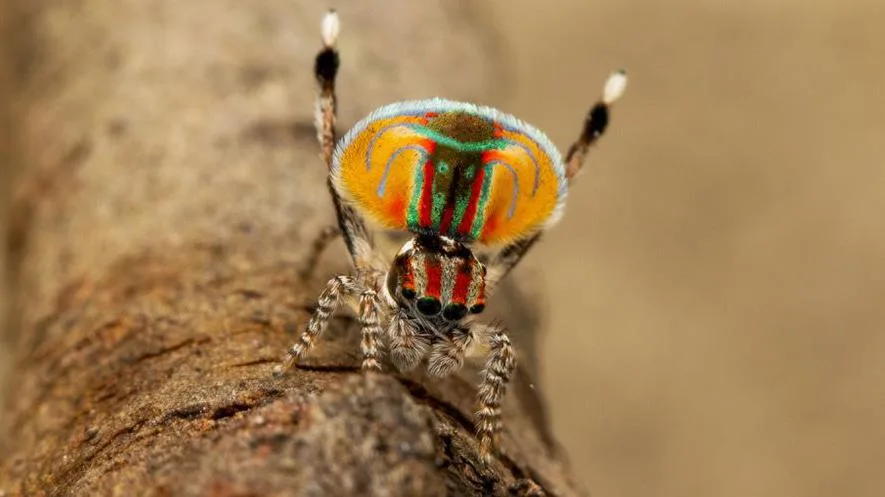
Peacock spiders, found across Australia, are named for the dazzling, iridescent patterns on the males’ abdomens, which they display during elaborate courtship rituals. These rituals involve rhythmic movements and a distinctive drumming sound produced by their feet, akin to a spider’s song. Each species boasts unique dance moves, songs, and color patterns, making them a striking example of evolutionary divergence. Researchers, including Jonah Walker from the Sanger Institute, are captivated by this diversity and are studying it to understand the processes driving variation in nature.
Walker, who overcame his childhood fear of spiders to pursue this research as part of his PhD, was initially drawn to the captivating behavior of peacock spiders. “When I first saw their dances, any apprehension I had vanished almost instantly,” he shared. Along with his group leader, Dr. Joana Meier, and an international team, Walker has meticulously collected data on every known peacock spider species. Their work involves cataloging each species’ behaviors, movements, and songs, then cross-referencing this information with their DNA to identify the genetic basis for these traits.
Unlocking the Secrets of Dark DNA
The team’s findings suggest that the key to the spiders’ diversity may lie not only in their genes but also in the enigmatic “dark DNA,” the non-coding regions of the genome whose functions remain largely unknown. In humans, genes determine traits like height or eye color, but much of the DNA consists of these non-coding segments, which make up a significant portion of the genome. Peacock spiders, however, have three times more dark DNA than humans, leading researchers to hypothesize that these regions may play a critical role in their rapid diversification. “It’s early in our research, but the influence of dark DNA on how these spiders evolve is a tantalizing lead,” Walker explained.
This investigation into peacock spiders is part of a broader effort to understand genetic diversity across species. Dr. Meier, who has already decoded the DNA of 1,000 species of butterflies and moths, other groups known for their vast species diversity, emphasizes the interconnectedness of life. “All living organisms share similar DNA,” she noted. “By studying the genetic codes of diverse species, we can uncover universal principles about how genes function and what role dark DNA plays, which also deepens our understanding of ourselves.”
The peacock spider research is a stepping stone in one of the most ambitious scientific endeavors to date: the Earth BioGenome Project. This global initiative aims to sequence the DNA of all 1.8 million known species of plants, animals, and fungi within the next decade. To date, researchers have decoded the genomes of approximately 3,000 species, with plans to reach 10,000 by next year. This monumental effort seeks to provide unprecedented insights into the evolution of life and the intricate relationships between species.
By comparing the genetic profiles of peacock spiders, scientists hope to pinpoint which genes or non-coding DNA regions drive their unique traits, such as their vibrant colors or distinctive dances. This could reveal how environmental pressures trigger rapid speciation, allowing these spiders to adapt to changing conditions. The findings may also have broader implications, offering clues about the mechanisms behind biodiversity in other species, from butterflies to plants.
As researchers continue to unravel the mysteries of dark DNA, the peacock spider serves as a vivid example of nature’s creativity. Their dazzling displays and genetic complexity highlight the intricate processes that shape life on Earth. Through this work, scientists are not only decoding the secrets of these tiny dancers but also gaining a deeper understanding of the fundamental principles governing the diversity of life, from the smallest arachnid to the largest mammal.







 Health5 years ago
 Health4 years ago
 Health4 years ago
 Fashion5 years ago
 Fashion5 years ago
 Fashion9 years ago
 Health5 years ago
 Health5 years ago
 Health5 years ago
 Health & Wellness5 years ago