Tech
Tariffs, AI, and the Automation Paradox: How Trump’s Trade War Could Accelerate the Very Job Losses It Aims to Prevent
In 2025, President Donald Trump has reignited his economic nationalism campaign, introducing sweeping tariffs aimed at revitalizing American manufacturing and bringing jobs back home. While the intention is to protect domestic industries and reduce reliance on foreign imports, especially from China, the unintended consequence may be an acceleration of automation and artificial intelligence (AI) adoption—ironically threatening the very jobs these policies aim to safeguard.
The Tariff Strategy: A Double-Edged Sword
Trump’s tariff policy includes significant levies: up to 125% on Chinese goods, 25% on imports from Mexico and Canada, and 10% on other nations. These measures are designed to encourage companies to manufacture within the United States by making foreign goods more expensive. However, this approach overlooks the complexities of modern global supply chains, particularly in the technology sector.
For instance, companies like Nvidia, a leader in AI chip production, rely heavily on international manufacturing partnerships. Nvidia’s collaboration with Foxconn to build a massive AI chip facility in Guadalajara, Mexico, is a case in point. The new tariffs could substantially increase the cost of importing these chips into the U.S., potentially making domestic AI development more expensive and less competitive globally.
The Automation Incentive
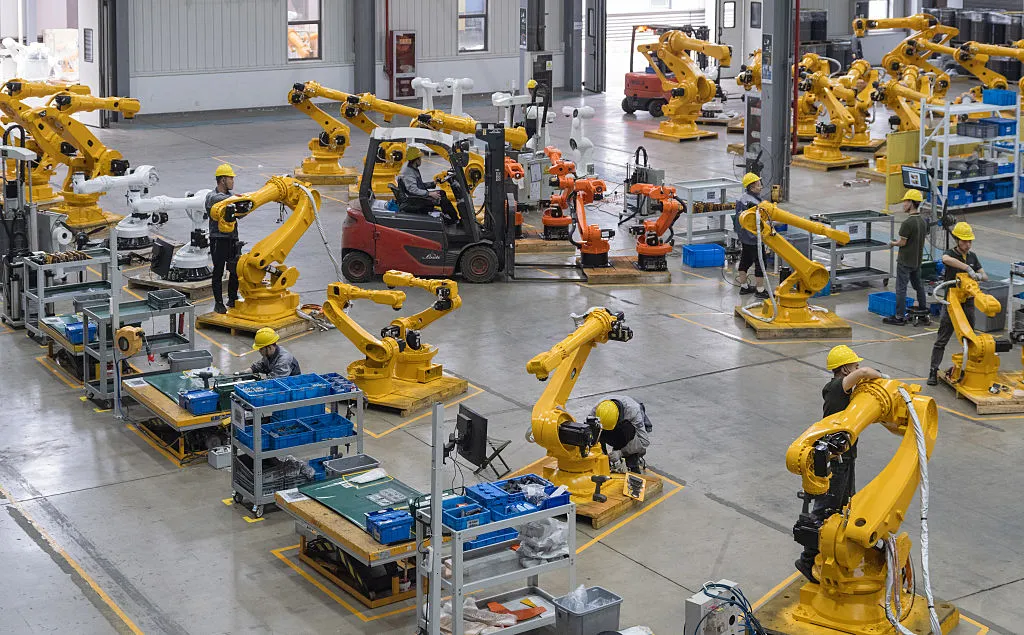
As tariffs raise the cost of imported goods and materials, companies face increased production expenses. To maintain profitability, many businesses may turn to automation and AI as cost-saving measures. Automating processes can reduce labor costs and mitigate the financial impact of tariffs, making it an attractive option for companies looking to stay competitive.
This shift towards automation is particularly evident in sectors like manufacturing and agriculture, where robots and AI systems can perform tasks traditionally done by human workers. The result is a paradox: policies intended to protect jobs may instead incentivize companies to replace workers with machines.
Impact on the AI Industry
The AI industry itself is not immune to the effects of these tariffs. Data centers, essential for AI development and deployment, rely on imported hardware components. Tariffs on these components can increase the cost of building and maintaining data centers, potentially slowing the growth of AI infrastructure in the U.S.
Moreover, companies like Apple and Tesla, which depend on global supply chains for their products, may face higher production costs. These increased expenses could be passed on to consumers or lead to reduced investment in innovation and development.

Global Competitiveness at Risk
While the U.S. grapples with the implications of its tariff policies, other countries may seize the opportunity to advance their own AI capabilities. Nations with more open trade policies and supportive environments for technology development could attract investment and talent, potentially surpassing the U.S. in AI innovation.
For example, China’s significant investments in AI research and development, coupled with its expansive manufacturing capabilities, position it as a formidable competitor. If U.S. companies find it more challenging to operate domestically due to tariffs, they may look to relocate or expand operations in countries with more favorable conditions.
The Need for a Balanced Approach
To achieve the goal of revitalizing American jobs without inadvertently accelerating automation-related job losses, a balanced approach is necessary. Policymakers should consider the following strategies:
-
Investment in Workforce Development: Providing education and training programs to equip workers with skills relevant to the evolving job market can help mitigate the impact of automation.
-
Support for Innovation: Encouraging research and development in AI and automation technologies can position the U.S. as a leader in these fields, creating new job opportunities in emerging industries.
-
Strategic Trade Policies: Crafting trade policies that protect domestic industries without imposing excessive costs on businesses can help maintain global competitiveness.
-
Collaboration with Industry Leaders: Engaging with companies at the forefront of technology can inform policies that support both economic growth and job creation.
While the intention behind Trump’s tariff policies is to protect and create American jobs, the complex realities of the global economy and technological advancement present challenges to this objective. Without careful consideration and strategic planning, these policies may inadvertently accelerate automation and AI adoption, leading to job displacement rather than job creation.
A nuanced approach that balances protectionist measures with support for innovation and workforce development is essential. By fostering an environment that encourages technological advancement while preparing workers for the future, the U.S. can strive to achieve economic growth that benefits all Americans.
Level Up Insight:
In the rapidly evolving landscape of global trade and technology, it’s imperative to recognize that protectionist policies like tariffs, while well-intentioned, can have unintended consequences. As businesses seek to navigate increased costs, the allure of automation and AI becomes stronger, potentially displacing the very jobs these policies aim to protect.
For entrepreneurs and industry leaders, this underscores the importance of adaptability and forward-thinking. Investing in workforce development, embracing innovation, and fostering collaboration between policymakers and the private sector are crucial steps toward building a resilient economy.
At Level Up Magazine, we believe that the path to sustainable growth lies in balancing the preservation of existing jobs with the creation of new opportunities in emerging industries. By staying informed and proactive, we can collectively shape a future that benefits both workers and businesses alike.