Health
Liang Wenfeng The Visionary Behind DeepSeek Who’s Shaping the AI Landscape and Challenging U.S. Tech Giants
In the fast-evolving world of artificial intelligence (AI), few figures have garnered as much attention as 39-year-old Liang Wenfeng, the founder of DeepSeek. A Chinese AI startup, DeepSeek, is quickly emerging as a key player in China’s ambition to establish self-sufficiency in AI technology. Liang’s leadership represents a shift in China’s approach to technology—from merely adopting innovations from abroad to creating groundbreaking, original AI models that rival the world’s best. With his focus on cultivating innovation and challenging traditional global norms, Liang is spearheading China’s ascent in the AI industry.
A New Era in China’s AI Industry
Liang’s rise to prominence occurred after his participation in a significant event on January 20, 2025. He was one of the nine speakers invited to a closed-door symposium chaired by China’s Premier, Li Qiang. The event brought together academics, government officials, and industry leaders and underscored the growing importance of DeepSeek in the global AI sector. Liang’s youthful presence stood in stark contrast to the older, more established figures around him, signaling a shift in China’s technological leadership. This generational shift not only reflects a change in the country’s tech landscape but also highlights China’s growing self-confidence in its ability to develop world-leading innovations rather than simply follow global trends.
Revolutionizing AI with DeepSeek’s Cutting-Edge Models
Under Liang’s leadership, DeepSeek has introduced AI models that challenge established players like OpenAI and Google DeepMind. Among the most notable of these is DeepSeek-V3, which has been hailed as one of the most advanced AI models to emerge from China. Unlike other AI models that require millions of dollars in computing power, DeepSeek-V3 was trained using less than $6 million in resources—making it up to 50 times cheaper than models developed by U.S.-based companies. DeepSeek’s ability to create high-performing models at such a fraction of the cost has sent shockwaves through the AI industry, with many experts now wondering whether China might soon overtake the U.S. in AI innovation.
Moreover, DeepSeek’s models have demonstrated comparable or even superior capabilities to those of U.S. tech giants. This is particularly important for China, which has historically lagged behind in the AI space when compared to the U.S. and other Western nations. By advancing its own cutting-edge technology, DeepSeek is positioning itself as a competitor to established global leaders in AI, marking a significant shift in the industry.
Championing Open-Source AI for Global Accessibility
One of the most distinctive aspects of DeepSeek’s approach is its commitment to open-source development. Unlike closed-source models, where the technology is proprietary and tightly controlled, DeepSeek has made its AI models openly available to the global tech community. This move has profound implications for the development of AI worldwide, as it allows developers to access, modify, and adapt DeepSeek’s technology for their own applications.
By making its models open-source, DeepSeek is democratising access to AI technology and encouraging innovation across the globe. This stands in contrast to the business practices of companies like OpenAI, which has kept its cutting-edge models proprietary. Liang’s belief in open-source development stems from the idea that it is more than just a business strategy—it’s a cultural practice. He argues that by fostering open-source collaboration, DeepSeek is not only contributing to the advancement of AI but also gaining “soft power” that strengthens China’s position in the global tech landscape.
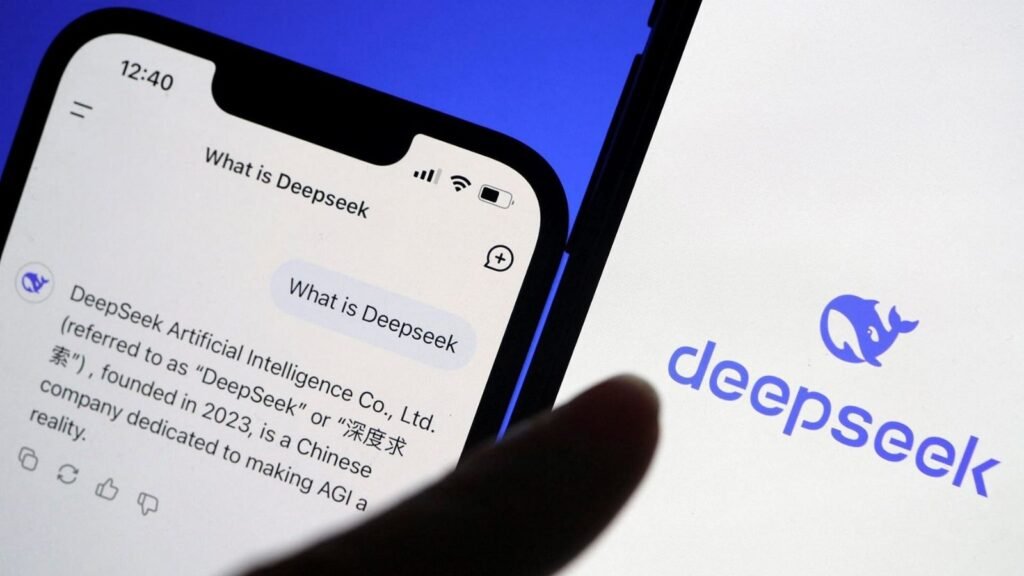
The success of DeepSeek’s AI Assistant, which recently surpassed ChatGPT as the top-rated free app on Apple’s U.S. App Store, is a testament to the power of this open-source approach. The app’s popularity underscores the global demand for advanced, affordable AI tools and highlights the growing influence of DeepSeek in the tech world.

Navigating Export Controls and Resource Limitations
Despite facing considerable challenges, particularly U.S. export controls on advanced semiconductors, DeepSeek has managed to remain resilient and innovative. These export restrictions, which aim to limit China’s access to cutting-edge hardware, have been a significant hurdle for Chinese tech companies. However, DeepSeek has found ways to work around these limitations by using less advanced chips and optimising its training methods. This ingenuity has enabled DeepSeek to develop high-performing AI models that rival those produced by U.S. companies, demonstrating that superior AI does not necessarily require the most advanced hardware.
Liang’s ability to navigate these export controls is a reflection of his resourcefulness and his commitment to advancing China’s AI capabilities regardless of external obstacles. This resilience is a crucial component of DeepSeek’s strategy to become a leader in the global AI industry and challenge the dominance of U.S. tech giants.
Liang’s Vision: A Culture of Curiosity and Innovation
Liang’s vision for China’s AI future goes beyond merely creating powerful technology. He aims to cultivate a culture of curiosity and innovation within China’s tech sector. He believes that innovation should not be driven solely by business considerations; it also requires a deep sense of curiosity and a desire to create. In this sense, Liang is advocating for a fundamental shift in China’s approach to technology—from a focus on rapid commercialisation to a more balanced emphasis on original research and development.
Liang’s belief in the importance of fundamental R&D is also evident in DeepSeek’s commitment to solving some of the most challenging problems in AI. By pursuing long-term, groundbreaking research rather than focusing solely on short-term commercial applications, Liang is positioning DeepSeek as a company that is not just building technology but also advancing the field of AI itself.
Looking to the Future
Liang Wenfeng’s leadership at DeepSeek marks a transformative moment for China’s AI development. By prioritising innovation, embracing open-source principles, and overcoming resource constraints, DeepSeek is poised to play a critical role in reshaping the global AI landscape. Liang’s strategic direction not only challenges the existing paradigms but also sets the stage for a more competitive and inclusive technological future. As DeepSeek continues to push the boundaries of AI, it is clear that Liang’s vision for China’s AI future is one of global prominence and technological leadership.