Business
Australia’s Luxury Retail Surge: A Post-Pandemic Boom

Australia has emerged as a global leader in pandemic response, and its retail landscape is now reaping the benefits. While other nations struggle with economic recovery, Australia’s retail sector is experiencing an impressive resurgence, particularly in luxury fashion. High-end brands are capitalising on this momentum by expanding their physical presence across the country.
Despite intermittent lockdowns, consumer confidence in Australia has soared. April saw the highest consumer sentiment levels since 2010, reflecting strong household disposable incomes and a positive economic outlook. Although Australia’s luxury market remains relatively small on a global scale, it has benefitted from the country’s robust commodities sector and its reputation as a sought-after destination for Chinese tourists. Despite strict travel restrictions, luxury sales are projected to grow steadily, reaching AU$4.5 billion by 2026, according to IbisWorld. With limited digital penetration, luxury brands in Australia are bucking global trends by investing heavily in brick-and-mortar retail spaces.
The Rise of Luxury Retail Expansion
The past few years have seen an influx of luxury brand openings across Australia. Retail expert Alex Alamsyah of Knight Frank reports that around 25 luxury projects have launched or are set to open in Sydney’s central business district between 2019 and 2022. Major global brands such as Hermès, Saint Laurent, Gucci, and Rolex have established flagship stores in key Australian cities, while local names like Incu and Camilla & Marc are also expanding their footprints.
Upcoming luxury openings include Balenciaga in Brisbane, Mulberry and Ralph Lauren Collection in Victoria’s Chadstone, and several flagship stores for Bally, Chanel, Dolce & Gabbana, and Valentino in Sydney. The increased investment underscores Australia’s growing reputation as a viable and lucrative luxury market.
Australia’s Luxury Market: A Safe Haven
With global markets facing economic instability, luxury brands view Australia as a promising alternative. Brian Wu, owner of multi-brand boutique Incu, notes that many international brands are increasingly interested in the Australian market, seeing it as a stable and thriving sector. Incu itself has launched multiple stores during the pandemic, reaffirming confidence in the local retail landscape.
Australian consumers are embracing this resurgence with enthusiasm. Research by Net-a-Porter suggests that Australians are more inclined than their global counterparts to anticipate and spend on events such as cocktail parties and sporting functions. Cartier’s managing director for Australia & New Zealand, Alban du Mesnil, highlights that consumers are gravitating towards timeless investment pieces rather than trend-driven items. This shift in purchasing behaviour is reflected in increased demand for classic jewellery collections such as Cartier’s Love and Panthère lines, as well as seasonless fashion items like Saint Laurent blazers and The Row’s wide-leg trousers.
Domestic Spending Driving Growth
The absence of international tourists, particularly Chinese travellers who typically contribute AU$12 billion annually to the Australian economy, has reshaped the luxury retail landscape. While foot traffic in luxury shopping centres has declined, average spending per customer has surged by 23% compared to 2019, according to Chadstone Shopping Centre’s head of marketing, Amy Wotton. Australian consumers who once splurged on overseas shopping trips are now redirecting their disposable income into domestic retail.
Retailers are leveraging this shift by focusing on deepening connections with local clientele. Wu emphasises that businesses that effectively engage with Australian consumers will retain their loyalty even after international travel resumes. Hiromi Yu, owner of luxury retailer Marais, echoes this sentiment, prioritising the needs of the domestic market while viewing international sales as an added advantage.

The Future of Luxury Retail in Australia
The opportunity for further growth extends beyond physical retail. Australia lags behind other developed nations in e-commerce penetration, making digital expansion a key area of potential investment. Non-food e-commerce accounted for only 14.1% of total retail spending in March 2021, far behind the UK’s 32.4% during the same period. Recognising this gap, retailers like Marais and Incu are ramping up their online presence while maintaining a strong focus on delivering a premium in-store experience.
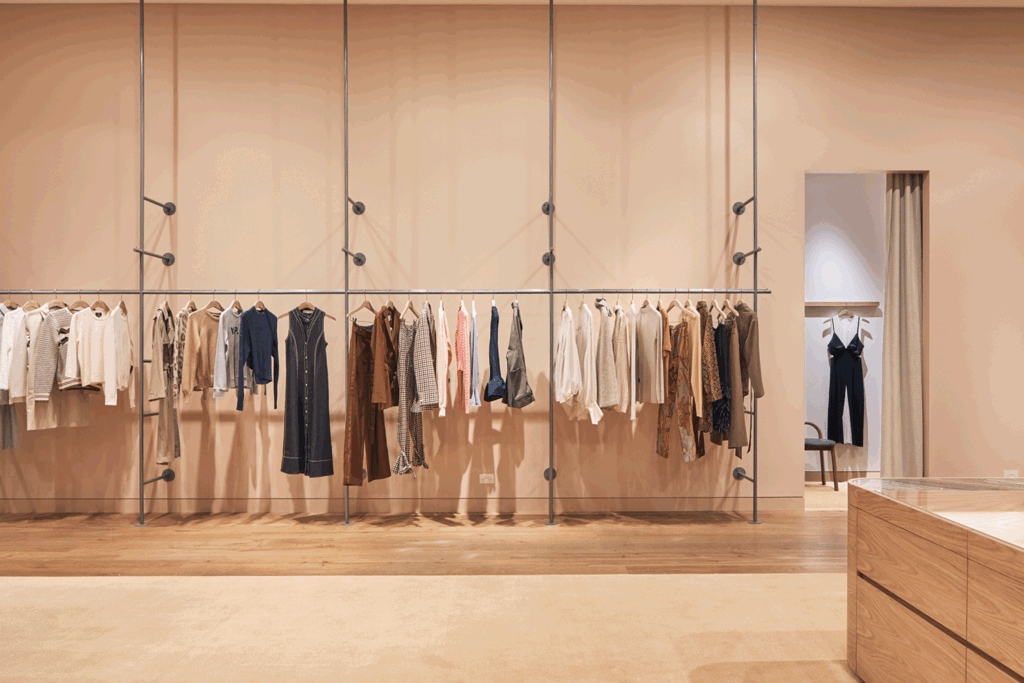
However, physical retail remains central to luxury sales. Wu highlights the importance of immersive shopping experiences, stating that special concept areas within stores help consumers better connect with brands. By providing engaging and theatrical in-store experiences, retailers can foster brand loyalty and drive foot traffic.
Expanding Luxury Beyond Sydney and Melbourne
Traditionally, Sydney and Melbourne have been the epicentres of Australia’s luxury market. However, shifting demographics are prompting brands to explore opportunities in Brisbane, Perth, and Adelaide. With population growth in these cities and increasing disposable incomes, luxury brands are finding untapped potential beyond Australia’s largest metropolitan centres.
Brisbane, in particular, has emerged as a key destination for luxury expansion. Louis Vuitton, Tiffany, and Dior have all opened flagship stores in the city, reflecting its growing affluence. Meanwhile, Perth is benefiting from a mining-driven economic boom, attracting luxury names such as Cartier and Van Cleef & Arpels.
Australia’s luxury retail sector is undergoing a remarkable transformation. The combination of strong domestic consumer confidence, an evolving retail landscape, and increasing investments in both physical and digital stores is positioning Australia as a critical market for luxury brands. While challenges remain, such as adapting to reversed seasonal trends and navigating e-commerce limitations, the overall outlook is positive. As brands continue to expand their presence and cater to a burgeoning local consumer base, Australia’s luxury retail scene is poised for long-term success.